What Is a Black Hole? Everything You Need to Know
A black hole is a region in space where gravity pulls so hard that nothing can get out. Not light, not radiation, not even information. The gravity is that intense because an enormous amount of matter has been crushed into a tiny space. Think of squeezing our entire Sun into a city the size of New York. That gives you a rough idea. Black holes sound like science fiction, but they are very real. Astronomers have photographed them, measured their effects on nearby stars, and detected the gravitational waves they produce when they collide. Here is what we actually know about these cosmic monsters.
What Exactly Is a Black Hole?
At its core, a black hole is what happens when gravity wins. Every object with mass has gravity. Earth's gravity keeps you on the ground. The Sun's gravity keeps Earth in orbit. But when a massive star runs out of fuel and collapses under its own weight, the gravity becomes so extreme that it warps space itself. The boundary around a black hole is called the event horizon. Cross it, and you are done. Nothing returns from beyond that point. The event horizon is not a physical surface you can touch. It is an invisible line in space where the escape velocity exceeds the speed of light. Since nothing travels faster than light, nothing escapes. Inside the event horizon, physics as we understand it breaks down. The math points to a singularity, a point of infinite density where all the mass is concentrated. But most physicists suspect the singularity is a sign that our equations are incomplete, not a literal description of reality.
How Are Black Holes Formed?
Most black holes form when massive stars die. A star with at least 20 to 25 times the mass of our Sun spends millions of years fusing hydrogen into helium, then helium into carbon, and so on up the periodic table. When it reaches iron, fusion stops. Iron does not release energy when fused. Without that outward pressure from fusion, gravity takes over in seconds. The outer layers of the star explode outward in a supernova, one of the most violent events in the universe. But the core collapses inward. If that core has more than about three times the Sun's mass, nothing can stop the collapse. Not even the pressure between neutrons packed shoulder to shoulder. It becomes a black hole. This whole process takes less than a second. One moment there is a stellar core. The next, there is a region of space that swallows everything around it. Some black holes may also form through direct collapse, skipping the supernova entirely. In the early universe, massive gas clouds may have collapsed straight into black holes without ever becoming stars first.
Types of Black Holes: From Stellar to Supermassive
Black holes come in at least three sizes, and possibly four. Stellar-mass black holes are the most common. They weigh between 3 and 100 times the mass of our Sun and form from dead stars. Our galaxy alone probably contains hundreds of millions of them. Supermassive black holes sit at the centers of most galaxies, including ours. They contain millions to billions of solar masses. Sagittarius A*, the black hole at the center of the Milky Way, weighs about 4 million times more than our Sun. The galaxy M87 has one that tips the scales at 6.5 billion solar masses. How supermassive black holes got so big is still debated. They may have grown by swallowing stars and merging with other black holes over billions of years. Or they may have formed from enormous gas clouds in the early universe. Intermediate-mass black holes fall between stellar and supermassive, roughly 100 to 100,000 solar masses. They are the hardest to find, but a few candidates have been detected in dense star clusters. Some physicists also theorize about primordial black holes, tiny ones that may have formed in the chaotic conditions right after the Big Bang. These could be as small as an atom but with the mass of a mountain. None have been confirmed yet.
What Happens Inside a Black Hole?
Honestly, nobody knows for certain, because no information comes back out. But physicists have some educated guesses based on general relativity and quantum mechanics. If you fell into a stellar-mass black hole, tidal forces would stretch you like taffy. Your feet, being closer to the singularity, would experience stronger gravity than your head. Scientists actually have a name for this: spaghettification. You would be pulled into a long, thin strand of atoms before reaching the singularity. A supermassive black hole would be different. Because the event horizon is so far from the center, tidal forces at the boundary are actually gentle. You could cross the event horizon of a supermassive black hole and not immediately notice anything unusual. But you would never get back out. Time itself behaves strangely near black holes. An outside observer watching you fall in would see you slow down, get dimmer, and eventually freeze at the event horizon. From your perspective, you would cross it in an instant. This is not speculation. It is a direct prediction of Einstein's general relativity, tested and confirmed by experiments with clocks on GPS satellites and the International Space Station.
The Closest Black Hole to Earth
The nearest known black hole to Earth is Gaia BH1, located about 1,560 light-years away in the constellation Ophiuchus. It was discovered in 2022 using data from the European Space Agency's Gaia spacecraft. Gaia BH1 is a stellar-mass black hole, roughly 10 times the mass of our Sun, orbiting a Sun-like companion star. Before Gaia BH1, the closest known candidate was V616 Monocerotis (A0620-00), about 3,000 light-years away. In 2023, astronomers found another close one: Gaia BH2, about 3,800 light-years away in the constellation Centaurus. These discoveries suggest there could be many more dormant black holes hiding in our galactic neighborhood. Most black holes that are not actively eating matter are essentially invisible. They do not glow, they do not emit radiation. The only way to find them is by watching how their gravity affects nearby stars. Current estimates suggest there could be 100 million to 1 billion stellar-mass black holes in the Milky Way alone. Most are just sitting there quietly in the dark.
The First Black Hole Photo: How We Captured It
In April 2019, the Event Horizon Telescope (EHT) collaboration released the first-ever image of a black hole. It showed the supermassive black hole at the center of galaxy M87, about 55 million light-years from Earth. The image looked like a blurry orange donut, but it was groundbreaking. That glowing ring is superheated gas swirling around the black hole at nearly the speed of light. The dark shadow in the center is the black hole's event horizon, the point of no return. To take this picture, scientists linked eight radio telescopes across the globe, effectively creating a virtual telescope the size of Earth. They collected so much data that it had to be shipped on hard drives rather than transferred over the internet. In May 2022, the EHT team released a second black hole image: Sagittarius A*, the one at the center of our own Milky Way. It was even harder to photograph because Sgr A* is much smaller and its surrounding gas changes within minutes, making the image blur. Both images matched the predictions Einstein made over a century ago. General relativity nailed it.
Are Black Holes Dangerous to Earth?
Short answer: no. The closest known black hole is over 1,500 light-years away. At that distance, it has zero effect on our solar system. A common fear is that a black hole could wander close and swallow Earth. While rogue black holes do exist, space is unimaginably vast. The odds of one passing close enough to affect us are essentially zero. Even if you replaced our Sun with a black hole of the same mass, Earth would keep orbiting normally. Black holes do not reach out and suck things in like vacuum cleaners. Their gravitational pull works exactly like any other object of the same mass. You would have to get very close to feel anything unusual. The real danger from black holes is their environment. Active black holes that are consuming matter produce intense jets of radiation that can sterilize entire regions of a galaxy. But Sagittarius A*, our local supermassive black hole, is relatively quiet right now. It is not actively feeding, so it poses no threat.
What Is Spaghettification?
Spaghettification is the real scientific term for what happens when you get too close to a black hole with a strong tidal gradient. The gravity pulling on the part of your body closest to the black hole is significantly stronger than the gravity on the part farthest away. This difference stretches you vertically while squeezing you horizontally. The result? You get pulled into a long thin noodle of atoms. Astrophysicist Stephen Hawking popularized the term, but the effect was predicted by general relativity long before it had a catchy name. In 2020, astronomers actually observed spaghettification for the first time. They watched a star called AT2019qiz get torn apart by a supermassive black hole about 215 million light-years away. The star was stretched into a thin stream of gas before being swallowed. Smaller black holes produce stronger spaghettification effects because the tidal forces are more concentrated. With a supermassive black hole, you could theoretically cross the event horizon intact. With a stellar-mass black hole, you would be pasta long before you reached the boundary.
Famous Black Holes in the Universe
Several black holes have become household names in astronomy. Cygnus X-1 was the first widely accepted black hole candidate, identified in 1964 as a powerful X-ray source. It weighs about 21 solar masses and is actively pulling gas off a nearby blue supergiant star. Sagittarius A* (Sgr A*) is our home galaxy's central black hole. It weighs 4 million solar masses and sits 26,000 light-years from Earth. Despite its enormous mass, it is surprisingly quiet, producing much less radiation than the supermassive black holes in other galaxies. M87* became famous as the first black hole ever photographed. At 6.5 billion solar masses, it is one of the most massive black holes known. It also shoots out a relativistic jet of plasma that stretches thousands of light-years across space. TON 618 is a true monster, one of the most massive black holes ever measured at about 66 billion solar masses. It powers a quasar so bright it outshines its entire galaxy. Phoenix A currently holds the record as the most massive known black hole at around 100 billion solar masses, discovered in 2022 at the center of the Phoenix galaxy cluster.
Black Holes and Time: How Gravity Bends Reality
One of the strangest things about black holes is their effect on time. Einstein's general relativity predicts that gravity slows down time, and this has been verified with atomic clocks. Clocks on GPS satellites tick faster than clocks on Earth's surface by about 38 microseconds per day because they experience slightly less gravity. Near a black hole, this effect becomes extreme. At the event horizon, time essentially stops from an outside perspective. If you watched a clock falling toward a black hole, you would see it tick slower and slower until it appeared to freeze at the event horizon. But the clock itself would experience time normally and sail right past the boundary. This is called gravitational time dilation, and it is not just theoretical. The movie Interstellar depicted this fairly accurately: the characters who spent time near a massive black hole aged much slower than those who stayed far away. It is real physics, and it means that time travel to the future is technically possible. Get close to a black hole, hang out for a while, come back, and more time will have passed for everyone else than for you.
Hawking Radiation: Can Black Holes Die?
In 1974, Stephen Hawking proposed something that shocked physicists: black holes are not entirely black. They slowly emit radiation and eventually evaporate. Here is the basic idea. Quantum mechanics tells us that empty space is not really empty. Pairs of virtual particles constantly pop into existence and annihilate each other. Near the event horizon, one particle can fall in while the other escapes. The escaping particle carries away a tiny bit of the black hole's energy, causing it to shrink. This process is called Hawking radiation. The catch? It is incredibly slow. A stellar-mass black hole would take roughly 10 to the power of 67 years to evaporate. For context, the universe is only about 13.8 billion years old. Supermassive black holes would take even longer, something like 10 to the power of 100 years. But in principle, every black hole has an expiration date. As a black hole shrinks, it radiates faster and gets hotter. In its final moments, it would release a burst of energy. Nobody has ever observed Hawking radiation directly because the effect is far too faint with current technology. But most physicists believe it is real.
Planets to explore
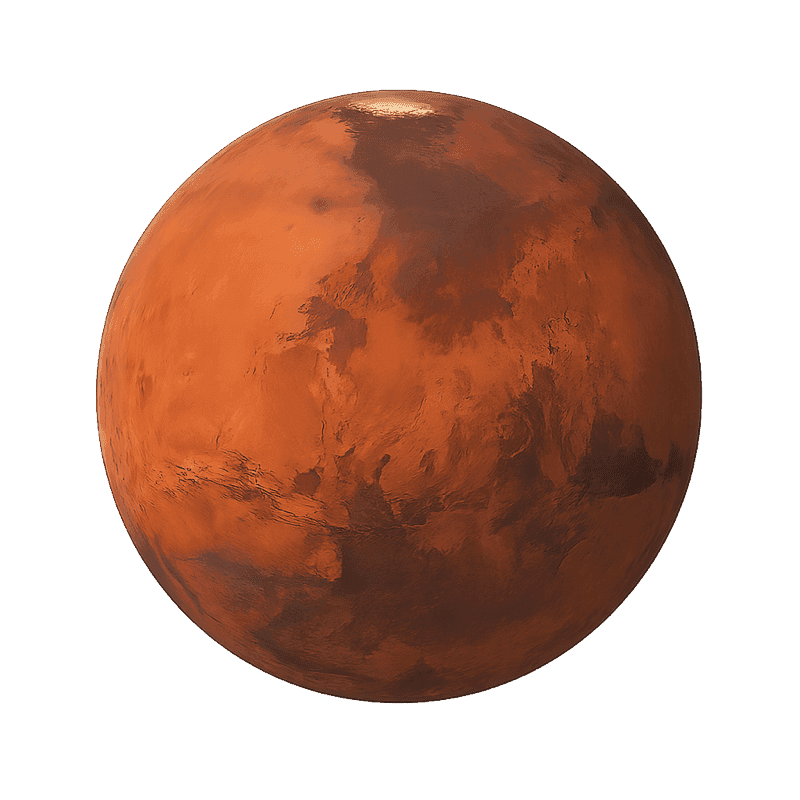
Mars
The Red Planet — a dusty, cold desert world that may have once harbored ancient rivers and lakes.
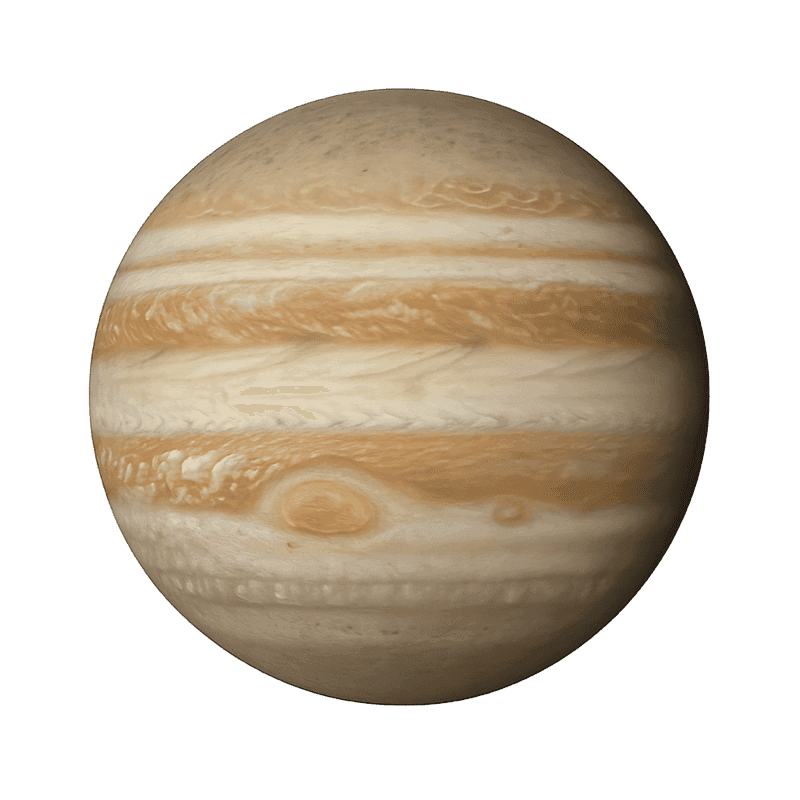
Jupiter
The king of planets — a colossal gas giant with a Great Red Spot storm raging for centuries.
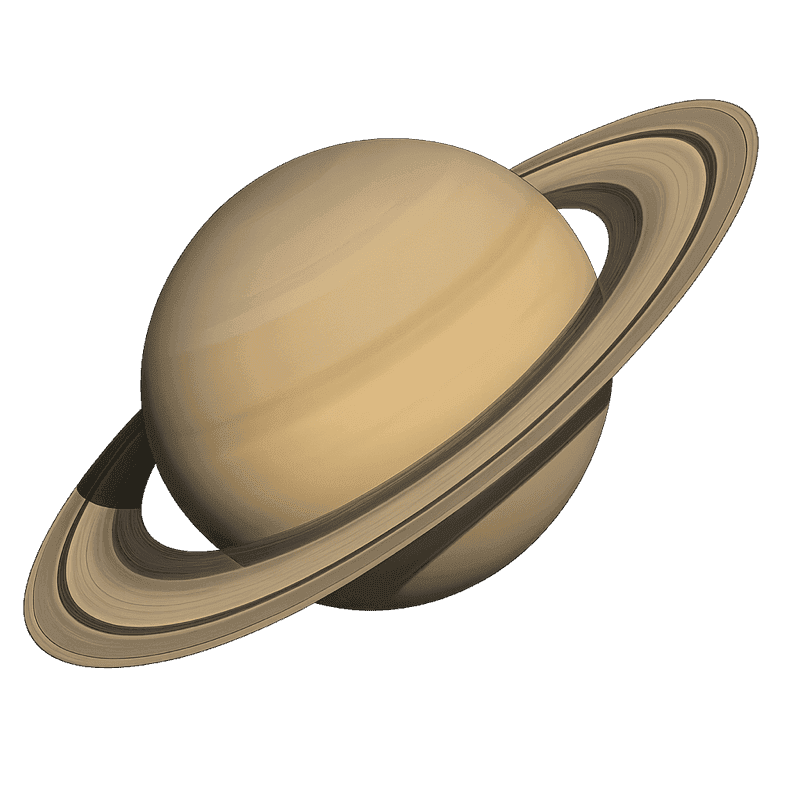
Saturn
The jewel of the Solar System — a majestic gas giant adorned with stunning rings.
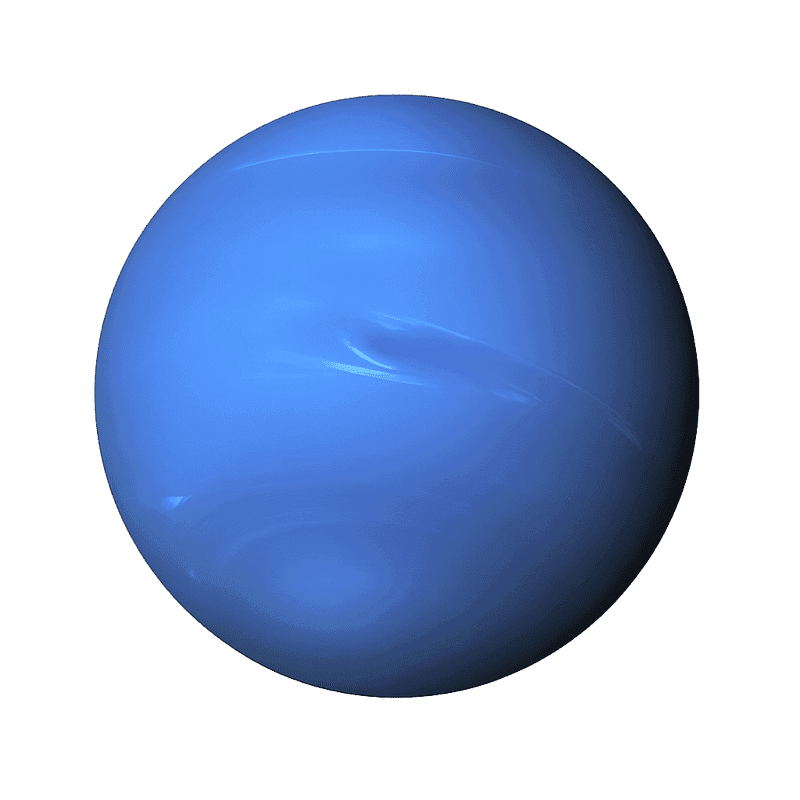
Neptune
A frigid ice giant with supersonic winds, the most distant planet in our Solar System.
Related articles & guides
Fascinated by black holes? Explore our planets page to browse our catalog. You can also buy a star as a gift. Learn how stars are named and about the different types of stars. Find out what a nebula is. Discover the largest star in the universe. Learn what a supernova is. Got questions? Check our FAQ.
Name a Star Near a Famous Black Hole
You can not own a black hole, but you can name a star and get a real certificate with its astronomical coordinates. Every star on BuyMyPlanet uses actual NASA data. Certificates start at $24.99 with instant digital delivery.
Name a starFrequently asked questions
What is a black hole in simple terms?
A black hole is a place in space where gravity is so strong that nothing can escape from it, not even light. It forms when a massive star collapses at the end of its life, packing a huge amount of matter into an extremely small space.
Can a black hole destroy Earth?
No. The closest known black hole is about 1,560 light-years away, far too distant to affect Earth. Even if a black hole replaced our Sun, Earth would continue orbiting normally. Gravity depends on mass, not on the type of object.
How big is the biggest black hole?
The most massive known black hole is Phoenix A, weighing roughly 100 billion times the mass of our Sun. It sits at the center of the Phoenix galaxy cluster, about 5.8 billion light-years from Earth.
What happens if you fall into a black hole?
With a small black hole, tidal forces would stretch you into a thin strand of atoms, a process called spaghettification. With a supermassive black hole, you could cross the event horizon without noticing anything strange at first, but you could never come back out.
Do black holes last forever?
No. According to Stephen Hawking's theory, black holes slowly emit radiation and lose mass over incredibly long timescales. A stellar-mass black hole would take about 10^67 years to evaporate. For comparison, the universe is only 13.8 billion years old.
Got Questions?
Here's everything you need to know about buying a planet
Here's the deal: this is symbolic ownership. Nobody can legally own a planet (there's actually a UN treaty about it). But what you DO get is a gorgeous personalized certificate with real astronomical data and a unique registration number. Think of it as the most original gift you can possibly give someone.
The planet's real name, your personalized owner name, a custom message if you want one, a unique registration number, and the date. It's designed to look premium enough to frame and hang on a wall.
It shows up in your email as a PDF within a few minutes of buying. You can print it at home, take it to a print shop for a nicer version, or just share it digitally. Simple.
People go crazy for it. We've sold over 3,247 planets so far and we get messages all the time from people saying it's the best gift they've ever received. It works for birthdays, Valentine's Day, Christmas, weddings, new babies... pretty much any occasion.
100%. Every planet in our catalog is a real celestial body discovered by NASA, ESA, or other space agencies. We don't make anything up. The data on your certificate comes from confirmed scientific discoveries.
No problem. You've got 30 days to change your mind. Just email us at ethan@buymyplanet.com and we'll sort it out.
Yes! We sell both planets and stars. Stars are beautiful and classic. Planets are full worlds with their own characteristics, categories, and stories. Both come with a personalized certificate and real astronomical data. Pick what fits best, or get both.
Yep! Each certificate gets its own unique registration number. It's like naming a star. The ownership is personal to you, and your certificate is one of a kind.
Right now we do instant digital PDF certificates. You can print them at home or at any print shop. We're working on framed physical versions that'll ship to your door. Stay tuned.
Totally. Symbolic planet ownership is a novelty gift, kind of like star naming services. The 1967 Outer Space Treaty says no country can claim a planet, but personalized certificates are perfectly fine. It's a beloved gift worldwide.
BuyMyPlanet offers symbolic naming certificates. We do not sell actual ownership rights to celestial bodies. Astronomical data is sourced from public NASA databases.