What Is a Nebula? The Giant Clouds Where Stars Are Born
A nebula is a giant cloud of gas and dust floating in space. Some nebulae are where brand new stars are born. Others are the leftovers of stars that already died. The word comes from Latin and literally means cloud. Pretty straightforward for once in astronomy. These things are enormous. A single nebula can stretch across hundreds of light-years, which means light itself takes centuries to cross from one side to the other. And they come in wild colors and shapes that make them some of the most photographed objects in the universe. Here is everything worth knowing about nebulae and why they matter.
Nebula Definition: What Does Nebula Actually Mean?
The word nebula comes from the Latin word for cloud or mist. The plural is nebulae (Latin) or nebulas (English). Both are correct. Astronomers have been using the term since at least the 1700s, though back then they used it for pretty much anything fuzzy they saw through a telescope. Galaxies, star clusters, actual nebulae, it all got lumped together. It took until the 1920s for Edwin Hubble to prove that some of those fuzzy patches were actually entire galaxies millions of light-years away. Today the definition is more precise. A nebula is an interstellar cloud of dust, hydrogen gas, helium gas, and other ionized gases. They exist in the space between stars, which astronomers call the interstellar medium. Most of the gas in a nebula is hydrogen, roughly 90%. Helium makes up most of the rest. Then you get trace amounts of heavier elements like carbon, nitrogen, and oxygen mixed in with cosmic dust particles.
How Are Nebulae Formed?
Nebulae form through two main processes, and they are basically opposites. The first: a star dies and throws its outer layers into space. When a massive star runs out of fuel, it explodes as a supernova, blasting material outward at thousands of kilometers per second. What is left behind is an expanding shell of gas and dust. A supernova remnant. The Crab Nebula is the textbook example. Chinese astronomers recorded the supernova that created it in 1054 AD. Almost a thousand years later, the debris is still expanding. Smaller stars die more gently. A star like our Sun will eventually swell into a red giant, then shed its outer layers into space, creating what astronomers call a planetary nebula (confusing name, nothing to do with planets). The Ring Nebula and the Cat's Eye Nebula formed this way. The second process is gravitational collapse. Cold gas and dust floating in space start clumping together under gravity. As the clumps grow, they pull in more material and get denser. Eventually you get a thick cloud. A molecular cloud. These clouds can be absolutely massive. The Orion Molecular Cloud Complex stretches across hundreds of light-years and contains enough material to form thousands of stars.
Types of Nebulae: A Complete Guide
Astronomers classify nebulae into several types based on how they form and how they interact with light. Emission nebulae glow on their own. Hot young stars inside them blast ultraviolet radiation into the surrounding gas, which energizes hydrogen atoms and makes them emit red or pink light. The Orion Nebula is the most famous emission nebula, visible to the naked eye as a fuzzy patch in Orion's sword. Reflection nebulae do not produce their own light. They shine because they reflect light from nearby stars, like fog around a streetlamp. They tend to look blue because shorter wavelengths scatter more efficiently. The Witch Head Nebula near Rigel is a good example. Dark nebulae are dense clouds that block the light of stars behind them. You see them as dark patches against brighter backgrounds. The Horsehead Nebula in Orion is the most iconic one. It is a column of dark dust silhouetted against a glowing emission nebula. Planetary nebulae have nothing to do with planets. The name stuck from the 1700s when they looked like planet disks through small telescopes. They are shells of gas expelled by dying Sun-like stars. The Ring Nebula and Helix Nebula are classic examples. They last about 10,000 years before dispersing. Supernova remnants are the debris clouds left after massive stars explode. The Crab Nebula, Veil Nebula, and Cassiopeia A are well known examples. They expand at incredible speeds and enrich the surrounding space with heavy elements forged inside the dead star.
The Most Famous Nebulae You Should Know
The Orion Nebula (M42) is probably the most observed nebula in history. It sits about 1,344 light-years from Earth in the constellation Orion and you can see it without a telescope on a clear night. It is a stellar nursery actively forming new stars right now. Astronomers have found over 700 young stars inside it in various stages of formation. The Eagle Nebula (M16) became famous thanks to the Hubble Space Telescope's 1995 photo of the Pillars of Creation. Those pillars are columns of gas and dust several light-years tall where new stars are forming. The image became one of the most recognized astronomy photos ever taken. The Crab Nebula (M1) is the remains of a supernova observed by Chinese and Japanese astronomers in 1054 AD. At its center sits a pulsar, a rapidly spinning neutron star that rotates 30 times per second and sends out beams of radiation like a cosmic lighthouse. The Helix Nebula is sometimes called the Eye of God because of how it looks in photographs. It is one of the closest planetary nebulae to Earth at about 650 light-years away. It formed when a dying star shed its outer layers. The Horsehead Nebula is a dark nebula in Orion shaped like, well, a horse's head. It is about 1,500 light-years away and sits against a bright emission nebula background, which is what makes its silhouette visible.
How Big Are Nebulae?
Big does not really cover it. The smallest nebulae span a few light-years. The largest ones stretch across hundreds. To put that in perspective, one light-year is about 9.46 trillion kilometers. The Tarantula Nebula in the Large Magellanic Cloud is about 1,800 light-years across. It is so bright that if it were as close to us as the Orion Nebula, it would cast shadows on Earth at night. The Orion Nebula itself is about 24 light-years across. Sounds smaller, but that is still roughly 227 trillion kilometers. You could fit our entire solar system inside it thousands of times over. Despite their size, nebulae are incredibly thin. The gas in a typical nebula is far less dense than the best vacuum we can create in a laboratory on Earth. If you flew a spaceship through one, you would not notice anything. No fog, no resistance. The particles are so spread out that a cubic centimeter of nebula gas might contain only a few thousand atoms. For comparison, a cubic centimeter of air at sea level contains about 25 quintillion molecules.
Nebulae and Star Formation: Cosmic Nurseries
This is the really cool part. Nebulae are where stars are born. The process starts in the densest regions of molecular clouds. A disturbance, maybe a shockwave from a nearby supernova or the gravitational tug of a passing star, causes a region to start collapsing. As the gas falls inward, it heats up. A dense core forms at the center, surrounded by a spinning disk of gas and dust. When the core temperature hits about 10 million degrees Celsius, hydrogen fusion ignites. A star is born. The leftover disk of material around the young star can eventually form planets, moons, and asteroids. Our own solar system formed this way about 4.6 billion years ago from a collapsing cloud of gas and dust. The process is not rare. Right now, in the Orion Nebula alone, hundreds of new stars are forming. The Eagle Nebula's Pillars of Creation are another active star-forming region. Every star you see in the night sky, including our Sun, was born inside a nebula. Stellar nurseries also produce something called protoplanetary disks. These are flat rings of dust and gas orbiting newborn stars. The James Webb Space Telescope has captured stunning images of these disks, showing the early stages of planet formation happening right now.
Nebulae and Planets: How Are They Connected?
The connection between nebulae and planets is direct. Planets form from the same material as stars. When a nebula collapses and a star ignites at the center, the surrounding disk of gas and dust does not just disappear. It sticks around. Tiny dust grains collide and stick together, building up into pebbles, then rocks, then planetesimals, then full-blown planets. This is how Earth formed. This is how every planet in our solar system formed. The elements in your body, carbon, oxygen, iron, were all forged inside stars and scattered into nebulae when those stars died. A new generation of stars and planets formed from that enriched material. You are literally made of recycled nebula. The James Webb Space Telescope has observed protoplanetary disks around young stars in nearby nebulae, showing gaps and rings that strongly suggest planets are forming right now. These observations have confirmed what astronomers suspected: planet formation is common, not rare. Almost every star probably has planets. Scientists have also found complex organic molecules inside nebulae. Amino acid precursors, water, methanol, formaldehyde. The building blocks of life exist in interstellar clouds before planets even form. That has big implications for how common life might be in the universe.
Can You See Nebulae Without a Telescope?
A few, yes. The Orion Nebula is the easiest. On a clear dark night, look for Orion's Belt, three bright stars in a row. Below the belt, you will see Orion's sword. The middle star in the sword looks fuzzy. That fuzziness is the Orion Nebula, about 1,344 light-years away. You are looking at a stellar nursery with your bare eyes. The Carina Nebula in the southern hemisphere is also faintly visible to the naked eye under excellent conditions. It is much larger than the Orion Nebula but further away at about 7,600 light-years. The Lagoon Nebula (M8) in Sagittarius is another naked-eye target, though it helps to know exactly where to look. With binoculars, you can see quite a few more. The Lagoon and Orion Nebulae become much more impressive, and you can start to pick out the Trifid Nebula and the Eagle Nebula. A small telescope opens up dozens more. But here is the thing most people do not realize: nebulae through a telescope look nothing like the photos. Those stunning colorful images are long-exposure photographs that collect light over hours. Through a telescope eyepiece, most nebulae appear as faint gray smudges. Still pretty cool when you realize what you are actually looking at, but manage your expectations.
The History of Nebula Discovery
The first recorded observation of a nebula goes back to 964 AD when Persian astronomer Abd al-Rahman al-Sufi described the Andromeda Galaxy (which was then classified as a nebula) in his Book of Fixed Stars. But the systematic study of nebulae started much later. In 1610, Nicolas-Claude Fabri de Peiresc observed the Orion Nebula through a telescope. Charles Messier, a French astronomer hunting comets in the 1700s, got annoyed by fuzzy objects that were not comets and started cataloging them. His list became the Messier catalog, still used today. M1 (Crab Nebula), M42 (Orion Nebula), M31 (Andromeda, later reclassified as a galaxy). William Herschel expanded the catalog massively, discovering thousands of nebulae in the late 1700s and early 1800s. His son John Herschel continued the work. The big question that haunted astronomers for centuries: were these nebulae inside our galaxy or outside it? The Great Debate of 1920 between Harlow Shapley and Heber Curtis addressed this directly. In 1924, Edwin Hubble settled it by proving the Andromeda Nebula was actually a separate galaxy far beyond the Milky Way. That discovery changed everything we knew about the size of the universe.
Nebula vs Galaxy: What Is the Difference?
This confused astronomers for centuries, so do not feel bad if it confuses you too. A nebula is a cloud of gas and dust within a galaxy. A galaxy is a massive system containing billions of stars, along with gas, dust, and dark matter, all held together by gravity. The Milky Way is our galaxy. The Orion Nebula is a nebula inside our galaxy. Before the 1920s, astronomers could not tell them apart through their telescopes. The Andromeda Galaxy was called the Andromeda Nebula until Hubble proved it was a separate galaxy 2.5 million light-years away. Size is the most obvious difference. The largest nebulae are a few thousand light-years across. The Milky Way is about 100,000 light-years across. The Andromeda Galaxy is even bigger at roughly 220,000 light-years. Content is the other key difference. A nebula is mostly gas and dust, with maybe some young stars forming inside it. A galaxy contains hundreds of billions of stars, planetary systems, nebulae, star clusters, and supermassive black holes at their centers. Think of it this way: nebulae are neighborhoods. Galaxies are entire countries.
Planets to explore
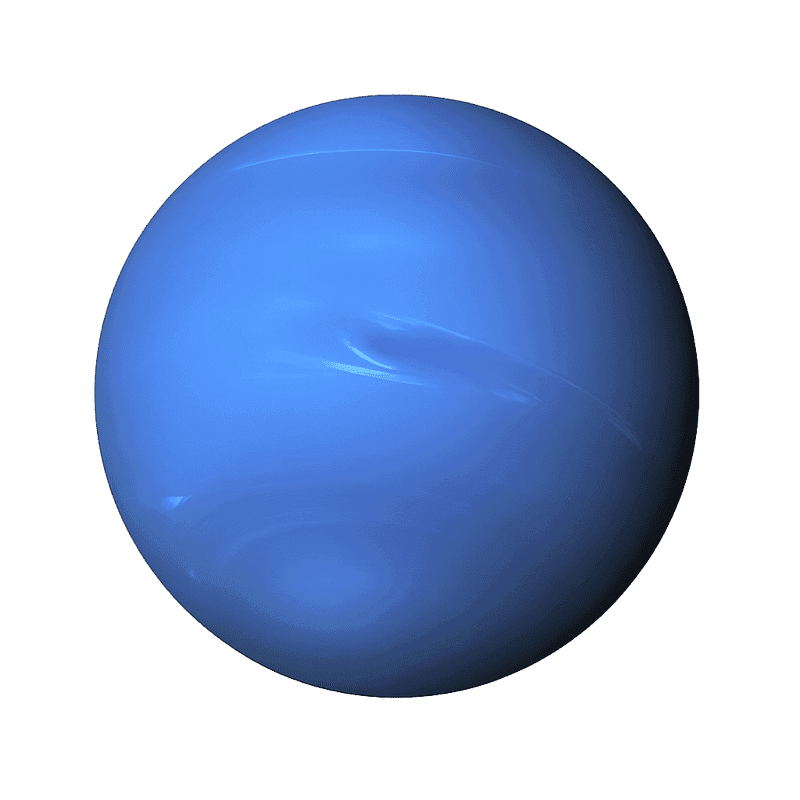
Neptune
A frigid ice giant with supersonic winds, the most distant planet in our Solar System.
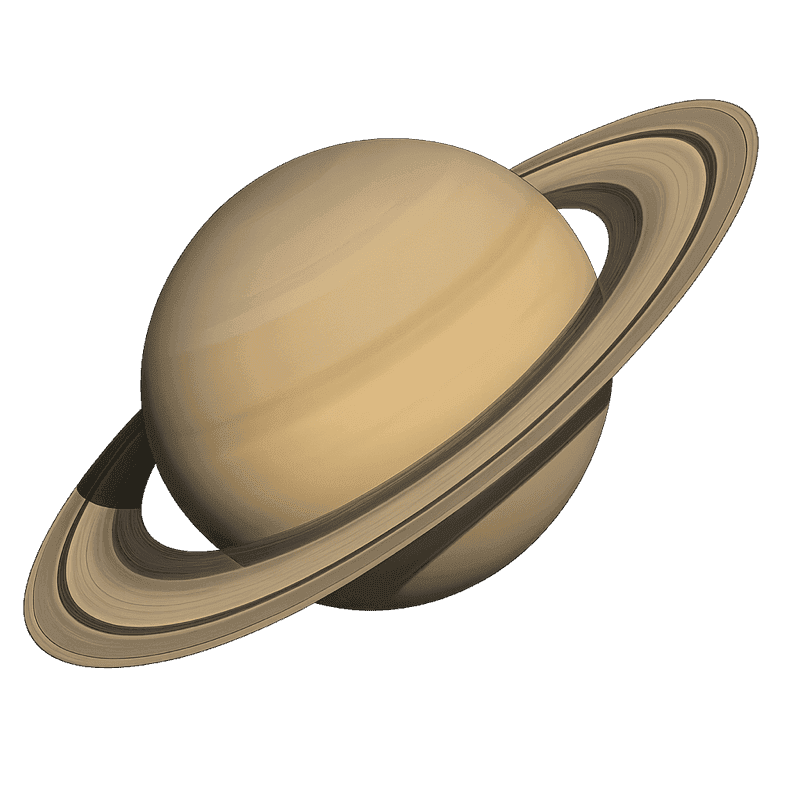
Saturn
The jewel of the Solar System — a majestic gas giant adorned with stunning rings.
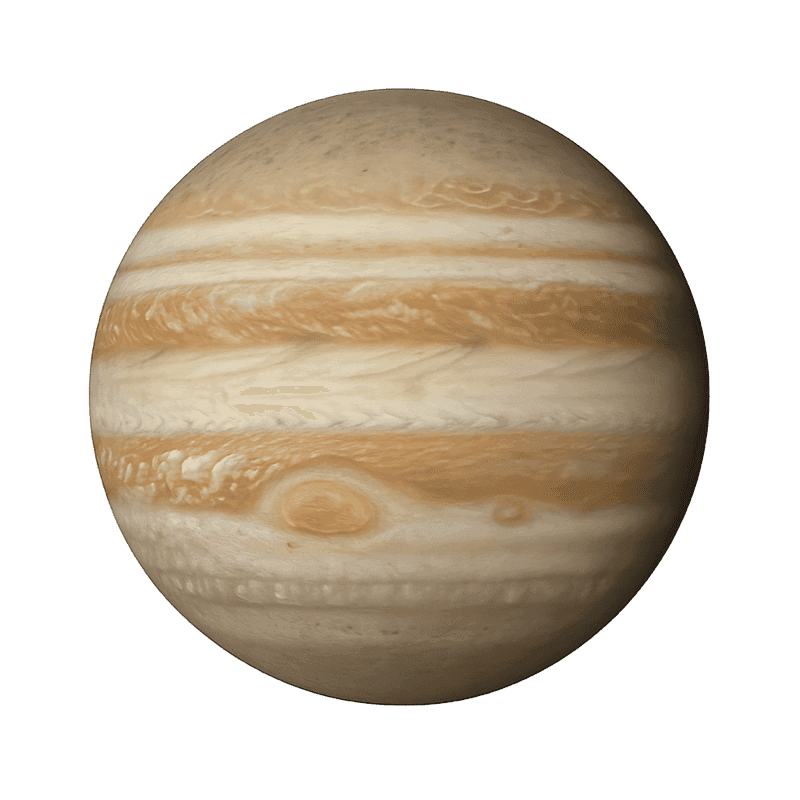
Jupiter
The king of planets — a colossal gas giant with a Great Red Spot storm raging for centuries.
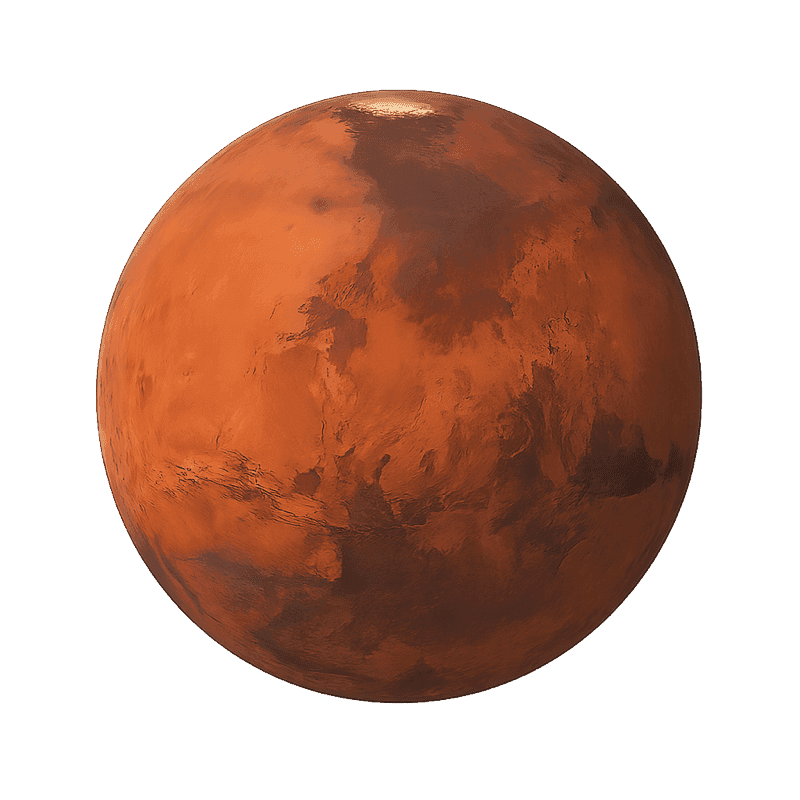
Mars
The Red Planet — a dusty, cold desert world that may have once harbored ancient rivers and lakes.
Related articles & guides
Curious about space? Explore our planets page to browse our catalog. You can also buy a star as a gift. Learn about the different types of stars that live inside nebulae. Discover what an exoplanet is and how they form from nebular material. New to stargazing? Check our beginner's guide. Got questions? Visit our FAQ.
Own a Piece of the Cosmos
Stars are born in nebulae. And now you can put someone's name on one. Our star naming certificates feature real stars with actual scientific data from NASA databases. Pick a famous star like Sirius or Betelgeuse, add a name and personal message, and get a personalized PDF certificate in minutes. Starting at $24.99.
Name a starFrequently asked questions
What is a nebula made of?
A nebula is made mostly of hydrogen gas (about 90%) and helium (about 9%), with small amounts of heavier elements like carbon, nitrogen, and oxygen. Cosmic dust particles, tiny grains of silicates and carbon compounds, are mixed in. Despite their enormous size, nebulae are extremely thin. The gas is far less dense than any vacuum we can create on Earth.
How many nebulae are there in the Milky Way?
Astronomers have cataloged about 3,000 planetary nebulae in the Milky Way, and estimates suggest there could be around 20,000 total. But that is just one type. When you include emission nebulae, dark nebulae, supernova remnants, and reflection nebulae, the total number is in the tens of thousands. Many are hidden behind dust clouds and impossible to observe from Earth.
Will our Sun create a nebula when it dies?
Yes. In about 5 billion years, the Sun will exhaust its hydrogen fuel, expand into a red giant, and eventually shed its outer layers into space. Those layers will form a planetary nebula that will last roughly 10,000 years before dispersing into the interstellar medium. The remaining core will become a white dwarf.
Can you visit a nebula?
Not with current technology. The closest nebula to Earth, the Helix Nebula, is about 650 light-years away. At the speed of our fastest spacecraft (about 70,000 km/h for Voyager 1), it would take roughly 10 million years to reach it. And if you did arrive, you probably would not realize you were inside one. The gas is so spread out that it would look like empty space.
What is the most beautiful nebula?
Beauty is subjective, but the most popular picks among astronomers and space enthusiasts include the Orion Nebula for its vivid structure, the Pillars of Creation in the Eagle Nebula for sheer drama, the Carina Nebula for its size and detail (especially in James Webb Space Telescope images), and the Helix Nebula for its eerie eye-like appearance. The Butterfly Nebula and Cat's Eye Nebula are also favorites.
Got Questions?
Here's everything you need to know about buying a planet
Here's the deal: this is symbolic ownership. Nobody can legally own a planet (there's actually a UN treaty about it). But what you DO get is a gorgeous personalized certificate with real astronomical data and a unique registration number. Think of it as the most original gift you can possibly give someone.
The planet's real name, your personalized owner name, a custom message if you want one, a unique registration number, and the date. It's designed to look premium enough to frame and hang on a wall.
It shows up in your email as a PDF within a few minutes of buying. You can print it at home, take it to a print shop for a nicer version, or just share it digitally. Simple.
People go crazy for it. We've sold over 3,247 planets so far and we get messages all the time from people saying it's the best gift they've ever received. It works for birthdays, Valentine's Day, Christmas, weddings, new babies... pretty much any occasion.
100%. Every planet in our catalog is a real celestial body discovered by NASA, ESA, or other space agencies. We don't make anything up. The data on your certificate comes from confirmed scientific discoveries.
No problem. You've got 30 days to change your mind. Just email us at ethan@buymyplanet.com and we'll sort it out.
Yes! We sell both planets and stars. Stars are beautiful and classic. Planets are full worlds with their own characteristics, categories, and stories. Both come with a personalized certificate and real astronomical data. Pick what fits best, or get both.
Yep! Each certificate gets its own unique registration number. It's like naming a star. The ownership is personal to you, and your certificate is one of a kind.
Right now we do instant digital PDF certificates. You can print them at home or at any print shop. We're working on framed physical versions that'll ship to your door. Stay tuned.
Totally. Symbolic planet ownership is a novelty gift, kind of like star naming services. The 1967 Outer Space Treaty says no country can claim a planet, but personalized certificates are perfectly fine. It's a beloved gift worldwide.
BuyMyPlanet offers symbolic naming certificates. We do not sell actual ownership rights to celestial bodies. Astronomical data is sourced from public NASA databases.