The Largest Star in the Universe: How Big Can Stars Get?
Our Sun feels massive. It holds 99.86% of all the mass in the solar system. But compared to the biggest stars out there, it's basically a marble next to a hot air balloon. So which star takes the crown? The answer is surprisingly tricky, and it keeps changing as astronomers make better measurements.
What Is the Largest Known Star?
As of 2026, the title belongs to Stephenson 2-18, a red supergiant located about 19,000 light-years from Earth in the constellation Scutum. Its estimated radius is roughly 2,150 times that of our Sun. If you dropped it into our solar system, its surface would stretch past the orbit of Saturn. That's not a typo. Past Saturn. The runner-up is UY Scuti, another red supergiant in the same constellation, with a radius around 1,700 times the Sun's. For years UY Scuti held the top spot, and you'll still see it listed as the biggest star in many sources. The truth is, measuring these stars is genuinely difficult. Their edges are fuzzy, they pulsate, and they're surrounded by dust. Different measurement techniques give different results. Think of it less as a firm ranking and more as a "these stars are absurdly huge" club.
How Big Is UY Scuti Compared to the Sun?
UY Scuti has a radius of about 1,700 solar radii. In kilometers, that's roughly 1.2 billion km, compared to the Sun's 696,000 km. If UY Scuti replaced our Sun, its photosphere would swallow Mercury, Venus, Earth, Mars, and Jupiter. Light takes about 8 minutes to travel from the Sun to Earth. It would take over 6 hours to travel across UY Scuti's diameter. A commercial airplane flying at 900 km/h would need about 3,000 years to circle it once. The volume difference is even wilder. You could fit roughly 5 billion Suns inside UY Scuti. But here's the thing: despite being enormous, UY Scuti is only about 7 to 10 times more massive than the Sun. Most of its bulk is incredibly thin gas. The outer layers have a density lower than Earth's atmosphere at sea level.
Top 10 Largest Stars We Know About
Here's the current leaderboard of the biggest stars by radius: 1. Stephenson 2-18 (roughly 2,150 solar radii) in the Scutum constellation. 2. UY Scuti (about 1,700 solar radii), also in Scutum. 3. WOH G64 (around 1,540 solar radii), a red supergiant in the Large Magellanic Cloud that may have recently shrunk. 4. Westerlund 1-26 (about 1,530 solar radii) in the cluster Westerlund 1. 5. VY Canis Majoris (roughly 1,420 solar radii), once considered the largest star ever. 6. AH Scorpii (about 1,411 solar radii). 7. HR 5171 A (roughly 1,315 solar radii), a yellow hypergiant you can actually see with the naked eye. 8. RW Cephei (about 1,260 solar radii). 9. NML Cygni (around 1,183 solar radii). 10. Betelgeuse (roughly 764 solar radii), the most famous red supergiant, visible as Orion's left shoulder. Every one of these stars is a variable, meaning their size changes over time. Some pulsate by hundreds of solar radii.
Stephenson 2-18: The Current Record Holder
Stephenson 2-18 (also called St2-18 or RSGC2-18) sits in the massive star cluster Stephenson 2, about 19,000 light-years away. It was first cataloged by American astronomer Charles Bruce Stephenson in 1990, but its extreme size wasn't recognized until much later. With a radius estimated at 2,150 solar radii, its volume is roughly 10 billion times that of the Sun. If placed at the center of our solar system, its surface would reach well past the orbit of Saturn. Despite this insane size, it has a surface temperature of only about 3,200 Kelvin, giving it a deep red color. That's about half the temperature of the Sun's surface. It's also incredibly luminous, shining with about 440,000 times the Sun's luminosity. Like all red supergiants, its days are numbered. Within a few million years, it will likely collapse and explode as a supernova.
VY Canis Majoris: The Former Champion
Before UY Scuti stole the spotlight, VY Canis Majoris was the poster child for giant stars. Located about 3,900 light-years away in the constellation Canis Major, it was once measured at around 1,800 to 2,100 solar radii. More recent and precise measurements have brought that down to roughly 1,420 solar radii, which is still enormous. VY Canis Majoris is a red hypergiant, a step above a supergiant. It's losing mass at a furious rate, shedding material into space and creating a complex nebula around itself. Astronomers estimate it loses about 30 times the mass of Earth every year through stellar wind. It's essentially tearing itself apart. The Hubble Space Telescope has captured stunning images of the arcs, knots, and filaments of ejected material surrounding this dying giant. Within the next 100,000 years, VY Canis Majoris will likely explode as a hypernova.
How Do Astronomers Measure Star Sizes?
You can't exactly stretch a tape measure across something 19,000 light-years away. So astronomers use several indirect methods. The most common: measure a star's luminosity (total energy output) and its surface temperature. Using the Stefan-Boltzmann law, they can calculate the radius. Brighter and cooler means bigger. Another technique is interferometry, which combines light from multiple telescopes to resolve the tiny angular size of a distant star. The VLTI (Very Large Telescope Interferometer) in Chile has measured several of these giant stars directly. There's also lunar occultation, where astronomers watch a star blink out as the Moon passes in front of it. The speed of the dimming reveals the star's angular size. Each method has uncertainties. Dust between us and the star can make it look dimmer (and therefore seem smaller or larger depending on the calculation). The star's own pulsations mean its size literally changes from month to month. This is why the "largest star" title keeps moving around.
Why Do Stars Grow So Large?
Stars don't start out as monsters. They become giants toward the end of their lives. Here's the short version: a massive star burns through its hydrogen fuel, and the core contracts under gravity. That contraction heats up the core enough to start fusing helium and heavier elements. Meanwhile, the energy pouring outward pushes the outer layers farther and farther from the center. The star inflates like a balloon. The result: a core that's tiny and incredibly dense, wrapped in an envelope of gas that can extend billions of kilometers. Red supergiants like Betelgeuse and UY Scuti are in this phase right now. They've used up most of their hydrogen and their outer layers are expanding outward. The surface temperature drops as the gas thins out, which is why these enormous stars glow red instead of blue or white. It's counterintuitive, but the biggest stars are actually cooler on the surface than much smaller ones.
Biggest vs. Most Massive: They're Not the Same
Size and mass are two very different things in astronomy. The largest stars by radius are red supergiants, which are basically huge puffballs of thin gas. The most massive stars are blue supergiants and Wolf-Rayet stars, which pack extreme mass into a much smaller volume. R136a1, the most massive star known, has about 196 times the mass of the Sun. But its radius is only about 35 solar radii. Compare that to UY Scuti: 1,700 times the Sun's radius but only about 7 to 10 solar masses. R136a1 is essentially a compact nuclear furnace, while UY Scuti is an enormous cloud. The density of UY Scuti's outer layers is so low that it's technically closer to a vacuum than to anything we'd call a gas on Earth. If you could somehow stand on the "surface" of UY Scuti, you wouldn't even notice it. There's no solid boundary, just gas getting gradually thinner.
Can You See Any Giant Stars from Earth?
Yes, and you probably already have without knowing it. Betelgeuse, the 10th-largest known star, is visible to the naked eye as the reddish-orange dot at the top-left corner of the Orion constellation. It's one of the brightest stars in the night sky. In late 2019, Betelgeuse famously dimmed by about 60%, leading to wild speculation that it was about to explode as a supernova. Turns out it had just belched out a cloud of dust that blocked some of its light. HR 5171 A, a yellow hypergiant roughly 1,315 solar radii across, is technically visible without a telescope from the Southern Hemisphere, though it looks like an ordinary faint star. Most of the truly enormous stars, like UY Scuti and Stephenson 2-18, are too far away and too obscured by interstellar dust to see with the naked eye. You'd need at least a decent amateur telescope and dark skies. But Betelgeuse? Just look up on any winter night.
What Happens When Giant Stars Die?
Giant stars don't fade away quietly. They go out with one of the most violent events in the universe: a supernova. When a massive star runs out of fuel, the core can no longer support itself against gravity. It collapses in a fraction of a second, and the resulting shockwave blows the outer layers into space at speeds up to 30,000 km per second. For a few weeks, a single supernova can outshine an entire galaxy of 200 billion stars. What's left behind depends on the original star's mass. Stars between about 8 and 25 solar masses leave behind a neutron star, an object so dense that a teaspoon of it would weigh about 6 billion tons. The most massive stars collapse into black holes, where gravity is so intense that not even light can escape. Betelgeuse will almost certainly go supernova sometime in the next 100,000 years. When it does, it'll be visible during the day and might be as bright as the full Moon at night. But don't worry, at 700 light-years away, it's far too distant to harm Earth.
Name a Star After Someone You Love
Out of the hundreds of billions of stars in our galaxy, only a few hundred have traditional names like Sirius or Polaris. The International Astronomical Union (IAU) has approved about 451 official star names total. The rest are just catalog numbers. Star naming services let you pick a real star from NASA databases, give it a personal name, and get a certificate with the star's actual coordinates and constellation. BuyMyPlanet certificates cost $24.99 and include verified astronomical data for real stars. You get a personalized PDF instantly. The premium option at $29.99 adds a dedicated web page with a QR code. It's a symbolic gesture, not an IAU registration. But the star is real, the coordinates are verifiable, and it makes a genuinely unusual gift. Especially if the person you're giving it to geeks out about space.
Famous stars to explore
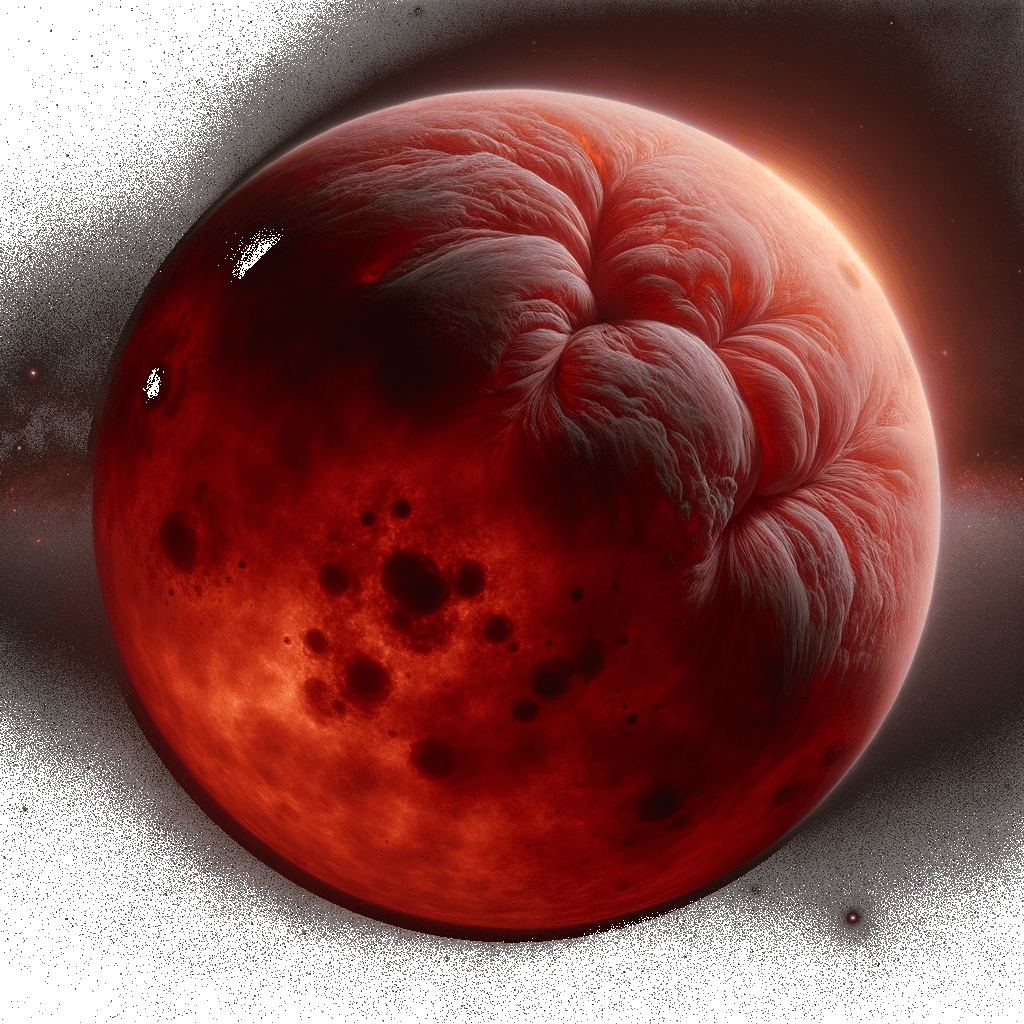
Betelgeuse
A red supergiant that could explode as a supernova any day now. Betelgeuse is so massive that if it replaced our Sun, it would swallow Mars.
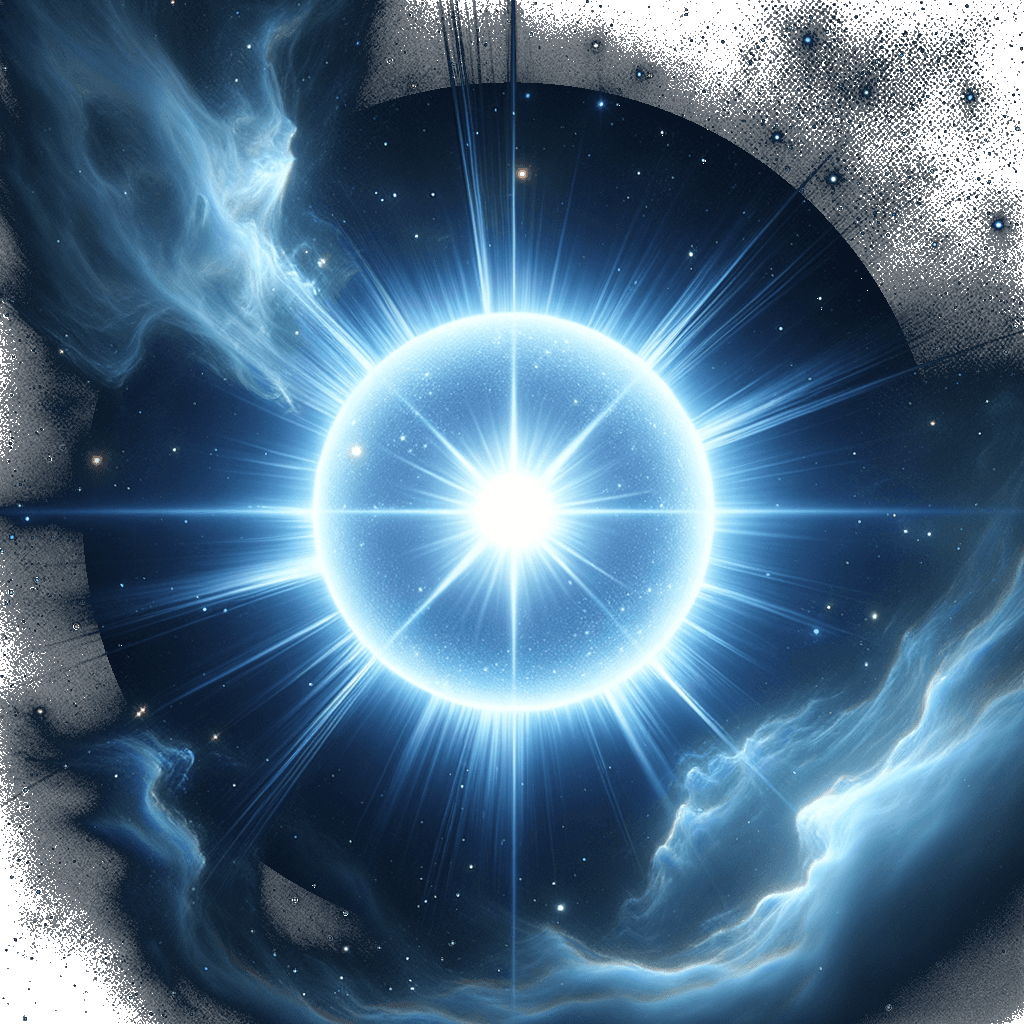
Sirius
The brightest star in the night sky. Sirius is a dazzling blue-white star just 8.6 light-years away. Ancient Egyptians built their calendar around it.
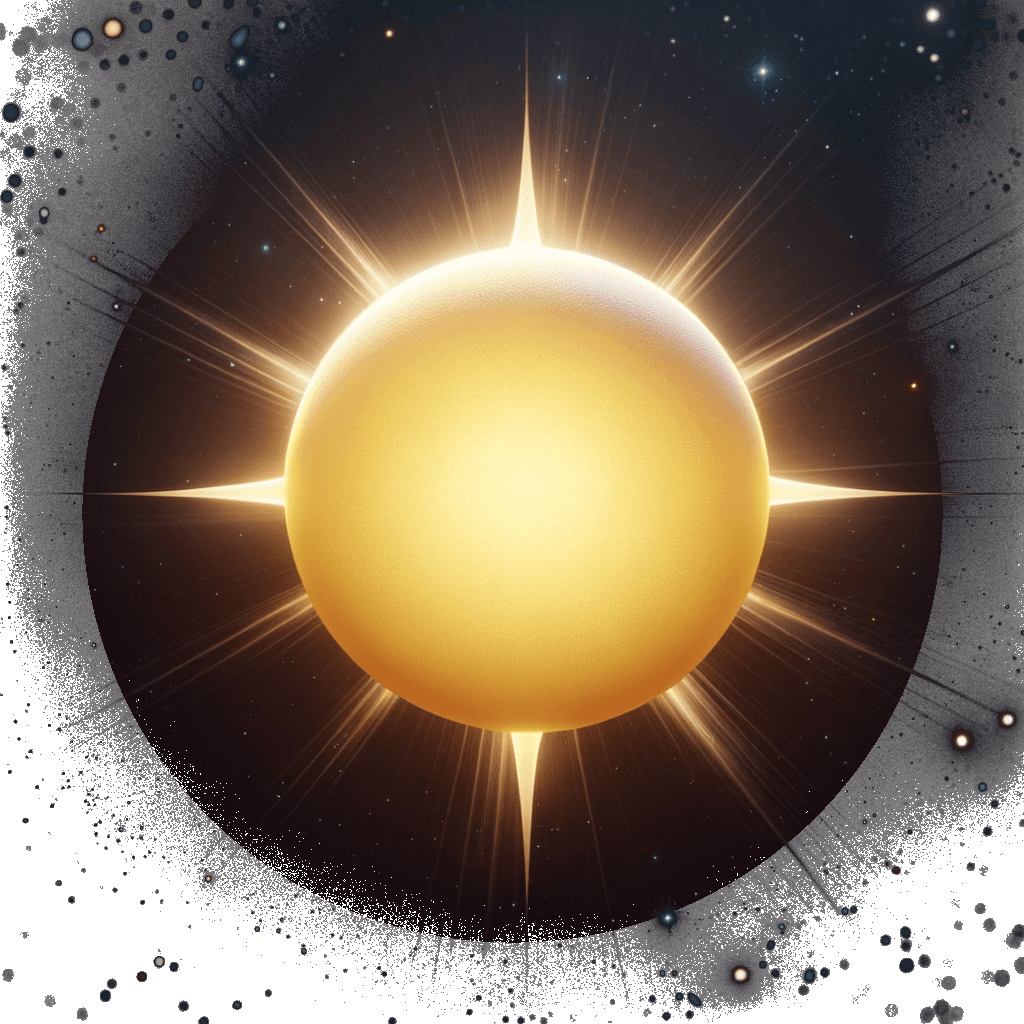
Polaris
The North Star. For centuries, sailors and explorers used Polaris to find their way. It sits almost perfectly above Earth's north pole.
Vega
One of the brightest stars you can see from Earth. Vega was the first star ever photographed (back in 1850) and the first to have its spectrum recorded.
Related articles & guides
Want to go deeper? Learn about how many stars are there in the universe. Explore our guide to the brightest stars in the sky. Check out our planets page to explore the full catalog. You can also buy a star as a gift. Discover what a black hole is. Learn what a supernova is. Got questions? Visit our FAQ.
Frequently asked questions
What is the biggest star in the universe?
The largest known star by radius is Stephenson 2-18, with an estimated radius of about 2,150 times the Sun's. UY Scuti (about 1,700 solar radii) is the runner-up. These measurements have significant uncertainties, and the ranking may change as astronomers refine their data.
How many Suns could fit inside UY Scuti?
About 5 billion Suns could fit inside UY Scuti by volume. Despite this, UY Scuti is only about 7 to 10 times the Sun's mass, because most of its volume is extremely thin gas.
Is Betelgeuse going to explode soon?
In astronomical terms, yes. Betelgeuse is expected to go supernova within the next 100,000 years. The famous dimming in 2019-2020 was caused by a dust cloud, not an imminent explosion. When it does go, it will be visible during the day but won't pose any danger to Earth at 700 light-years away.
What is the difference between a supergiant and a hypergiant?
Both are massive evolved stars, but hypergiants are the most luminous and often the most unstable. They lose mass rapidly through powerful stellar winds. Red supergiants like Betelgeuse are enormous but relatively stable. Hypergiants like VY Canis Majoris are actively shedding their outer layers and approaching the end of their lives.
Could a star ever be larger than our solar system?
Some already are. Stephenson 2-18's surface would extend past Saturn's orbit if placed where our Sun is. That covers about 80% of the solar system's planetary zone. No known star reaches the orbit of Neptune or the Kuiper Belt, but the universe is full of surprises.
Got Questions?
Here's everything you need to know about buying a planet
Here's the deal: this is symbolic ownership. Nobody can legally own a planet (there's actually a UN treaty about it). But what you DO get is a gorgeous personalized certificate with real astronomical data and a unique registration number. Think of it as the most original gift you can possibly give someone.
The planet's real name, your personalized owner name, a custom message if you want one, a unique registration number, and the date. It's designed to look premium enough to frame and hang on a wall.
It shows up in your email as a PDF within a few minutes of buying. You can print it at home, take it to a print shop for a nicer version, or just share it digitally. Simple.
People go crazy for it. We've sold over 3,247 planets so far and we get messages all the time from people saying it's the best gift they've ever received. It works for birthdays, Valentine's Day, Christmas, weddings, new babies... pretty much any occasion.
100%. Every planet in our catalog is a real celestial body discovered by NASA, ESA, or other space agencies. We don't make anything up. The data on your certificate comes from confirmed scientific discoveries.
No problem. You've got 30 days to change your mind. Just email us at ethan@buymyplanet.com and we'll sort it out.
Yes! We sell both planets and stars. Stars are beautiful and classic. Planets are full worlds with their own characteristics, categories, and stories. Both come with a personalized certificate and real astronomical data. Pick what fits best, or get both.
Yep! Each certificate gets its own unique registration number. It's like naming a star. The ownership is personal to you, and your certificate is one of a kind.
Right now we do instant digital PDF certificates. You can print them at home or at any print shop. We're working on framed physical versions that'll ship to your door. Stay tuned.
Totally. Symbolic planet ownership is a novelty gift, kind of like star naming services. The 1967 Outer Space Treaty says no country can claim a planet, but personalized certificates are perfectly fine. It's a beloved gift worldwide.
Own a Piece of the Cosmos
Name a real star with verified NASA data. Instant digital delivery, from $24.99.
Digital product. Symbolic ownership certificate.