Is Pluto a Planet? The Full Story Behind Pluto's Demotion
Short answer: no. Pluto is officially a dwarf planet. It lost its planet status in 2006 when the International Astronomical Union rewrote the definition of what counts as a planet. The decision was controversial then, and honestly, it still is. Plenty of scientists think the IAU got it wrong. But here's the full story of how a tiny ice world discovered in 1930 went from the ninth planet to the solar system's most famous dwarf.
How Pluto Became a Planet in 1930
Clyde Tombaugh was 24 years old when he spotted Pluto. Working at Lowell Observatory in Flagstaff, Arizona, he compared photographic plates of the night sky taken days apart, looking for anything that moved. On February 18, 1930, he found it. A tiny dot shifting against the background stars. The observatory announced the discovery on March 13, and the world had a ninth planet. The name Pluto came from an 11-year-old girl in England named Venetia Burney. She suggested the Roman god of the underworld, and the name stuck. For the next 76 years, every kid learned there were nine planets in our solar system. Textbooks, posters, classroom models: Pluto was always at the end of the line, the little oddball that didn't quite fit.
What Happened in 2006: The IAU Vote
The International Astronomical Union held its General Assembly in Prague in August 2006. On the agenda: finally define what a planet is. Astronomers had been arguing about it for years because new discoveries in the outer solar system kept turning up objects similar to Pluto. Eris, found in 2005, was actually more massive than Pluto. If Pluto was a planet, shouldn't Eris be one too? And what about Makemake, Haumea, and all the other icy bodies out there? On August 24, 2006, the IAU voted. Only about 424 astronomers out of roughly 10,000 members cast ballots. The result: Pluto was reclassified as a dwarf planet. The solar system went from nine planets to eight. People were not happy.
The Three Rules Every Planet Must Follow
The IAU established three criteria that a celestial body must meet to qualify as a planet. First, it must orbit the Sun. Pluto does that. Second, it must have enough mass for gravity to pull it into a roughly spherical shape. Pluto passes that test too. Third, it must have cleared the neighborhood around its orbit. This means the object needs to be gravitationally dominant in its orbital zone, having swept up or ejected most other debris. This third rule is where Pluto fails. Earth, Jupiter, Mars, and the other planets have all cleared their orbits. They're the biggest things in their orbital neighborhoods by a huge margin. Pluto shares its space with thousands of other icy objects in the Kuiper Belt.
Why Pluto Fails the Third Rule
Pluto orbits in the Kuiper Belt, a vast ring of icy debris beyond Neptune that stretches from about 30 to 55 astronomical units from the Sun. One AU is the distance from Earth to the Sun, roughly 93 million miles. The Kuiper Belt contains hundreds of thousands of objects larger than 60 miles across, plus trillions of smaller ones. Pluto is the biggest known Kuiper Belt object, but it hasn't swept up the rest. Its mass is only about 0.07 times the mass of all the other objects in its orbital zone combined. Compare that to Earth, which is 1.7 million times more massive than everything else in its orbit. Jupiter is even more dominant. Pluto just doesn't have the gravitational muscle to clear its path.
What Exactly Is a Dwarf Planet?
A dwarf planet meets the first two criteria for planethood but not the third. It orbits the Sun, it's round from its own gravity, but it hasn't cleared its orbital neighborhood. The name is a bit misleading because a dwarf planet is not actually a type of planet under the IAU definition. It's its own category. Right now, the IAU officially recognizes five dwarf planets: Pluto, Eris, Haumea, Makemake, and Ceres. Ceres is the odd one out because it sits in the asteroid belt between Mars and Jupiter, while the other four are all in the Kuiper Belt. Scientists suspect there could be dozens or even hundreds more dwarf planets waiting to be confirmed in the outer solar system.
The Kuiper Belt: Pluto's Real Neighborhood
Think of the Kuiper Belt as the solar system's attic. It's where leftover building materials from the formation of the planets ended up 4.6 billion years ago. The belt starts near Neptune's orbit and extends outward. It's home to Pluto, several other dwarf planets, and countless smaller icy objects called Kuiper Belt Objects (KBOs). Some KBOs have moons. Some have weird elongated orbits. A few even have their own thin atmospheres that appear and disappear as they move closer to and farther from the Sun, just like Pluto. Gerard Kuiper predicted the belt's existence in 1951, but it wasn't confirmed until 1992 when astronomers found the first KBO beyond Pluto. That discovery was one of the first hints that Pluto might not be as special as everyone thought.
What NASA's New Horizons Found at Pluto
Everything changed on July 14, 2015. After a nine-year journey covering three billion miles, NASA's New Horizons spacecraft flew past Pluto at 31,000 mph. The images it sent back stunned everyone. Pluto wasn't the dead, boring ice ball scientists expected. It had a giant heart-shaped nitrogen glacier called Tombaugh Regio (named after its discoverer). It had mountains made of water ice as tall as the Rockies. It had a thin atmosphere of nitrogen, methane, and carbon monoxide with blue haze layers. New Horizons found evidence of possible cryovolcanoes, volcanoes that erupt ice instead of lava. It found that Pluto's surface is geologically young in some areas, meaning something is reshaping it. This tiny world turned out to be one of the most geologically active and interesting places in the solar system.
Pluto's Five Moons
Pluto has five known moons: Charon, Nix, Hydra, Kerberos, and Styx. Charon is by far the largest. It's so big relative to Pluto that the two actually orbit a point in space between them, not inside Pluto itself. Some astronomers call the Pluto-Charon system a double dwarf planet. Charon is about half the diameter of Pluto and one-eighth its mass. For comparison, our Moon is only about one-quarter Earth's diameter. Charon has its own interesting geology, including a dark reddish polar cap that scientists think is made of organic compounds from Pluto's atmosphere that drifted over and froze. The four smaller moons are tiny, irregularly shaped, and probably captured Kuiper Belt debris.
Scientists Who Disagree with the Demotion
The Pluto debate didn't end in 2006. Alan Stern, the principal investigator of the New Horizons mission, has been one of the most vocal critics. His main argument: the clearing-the-orbit criterion doesn't make scientific sense. By that logic, if you moved Earth out to Pluto's orbit, it couldn't clear that zone either, so it wouldn't count as a planet. Stern and other researchers proposed an alternative definition in 2017, calling a planet any sub-stellar body that has never undergone nuclear fusion and has enough gravity for a roughly spherical shape. Under that definition, Pluto and dozens of other objects would be planets. The proposal hasn't been adopted, but it highlights that the IAU definition is far from universally accepted. Less than 5% of the world's astronomers voted on the 2006 resolution.
Other Dwarf Planets in Our Solar System
Pluto isn't alone in its dwarf planet category. Eris, discovered in 2005, is 27% more massive than Pluto and was the main reason the IAU felt pressured to define planethood. It orbits far beyond Pluto in the scattered disc region. Makemake is the second-largest known Kuiper Belt object after Pluto and has at least one small moon. Haumea is shaped like an egg because it spins incredibly fast, completing a rotation every four hours. It also has a ring system, making it the first known dwarf planet with rings. Ceres, the smallest of the five, sits in the asteroid belt and was visited by NASA's Dawn spacecraft in 2015. Each one is a unique world, and there are probably many more waiting to be found.
Could Pluto Ever Become a Planet Again?
It's possible, but unlikely anytime soon. The IAU would need to either redefine what a planet is or change the specific criteria. Some astronomers have pushed for a geophysical definition that focuses on a body's intrinsic properties (round shape, geological complexity) rather than its orbital dynamics. If that ever gets adopted, Pluto would be back in the club, along with dozens of other round objects. There's also a cultural argument: Pluto spent 76 years as a planet. Millions of people grew up with nine planets. Changing that created genuine public backlash. But science doesn't work by popular vote (ironically, neither did the IAU decision, given how few astronomers actually voted). For now, Pluto stays a dwarf planet, but the conversation isn't over.
How Pluto Connects Us to the Bigger Universe
Pluto's story is really about how we classify and understand the universe. Every time scientists discover something new, they have to decide where it fits. Sometimes the old categories don't work anymore. That's not a failure. That's science working as it should. Pluto taught us that our solar system is far more diverse and interesting than we thought. The Kuiper Belt alone contains worlds with mountains, atmospheres, moons, and maybe even underground oceans. If you're fascinated by Pluto and want to explore other planets in the solar system, you can browse our full collection of planets. Or if you've ever wondered if you can buy a planet, the answer involves a personalized certificate with real astronomical data for $24.99 from BuyMyPlanet.
Planets to explore
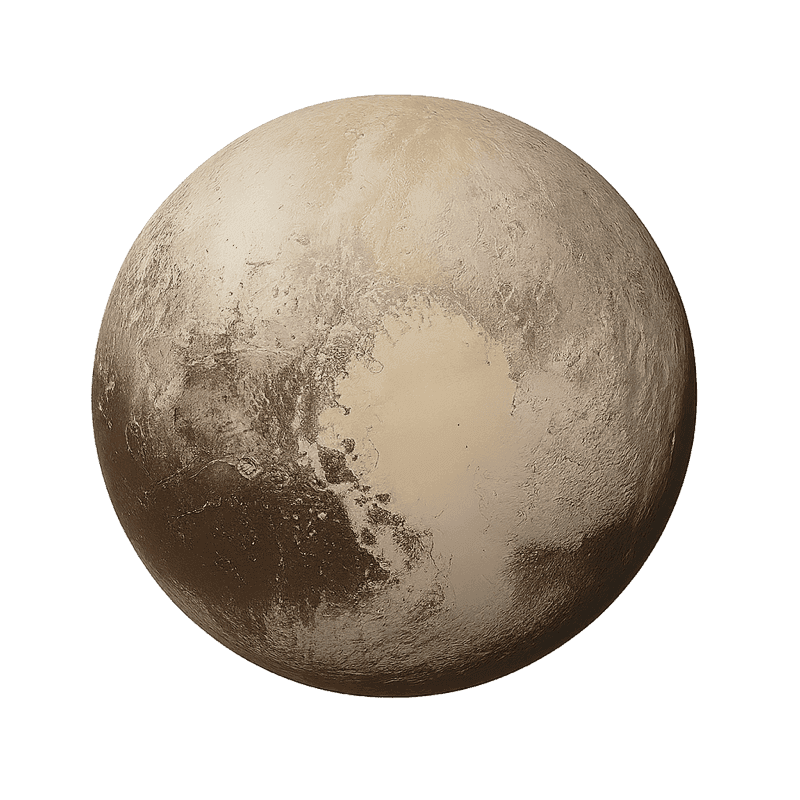
Pluto
Once the ninth planet, now a beloved dwarf planet at the edge of the Solar System.
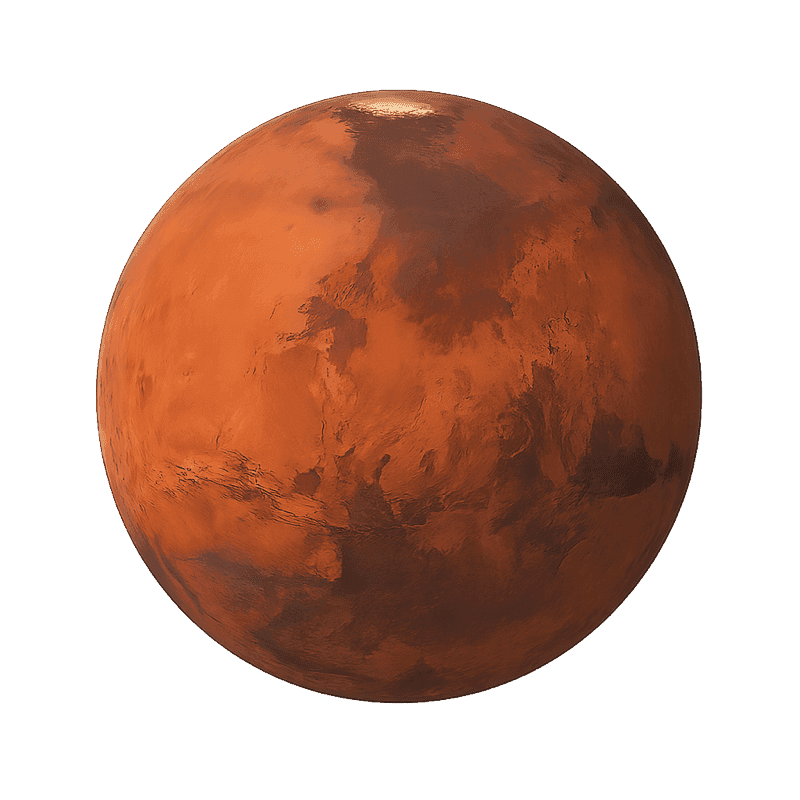
Mars
The Red Planet — a dusty, cold desert world that may have once harbored ancient rivers and lakes.

Neptune
A frigid ice giant with supersonic winds, the most distant planet in our Solar System.
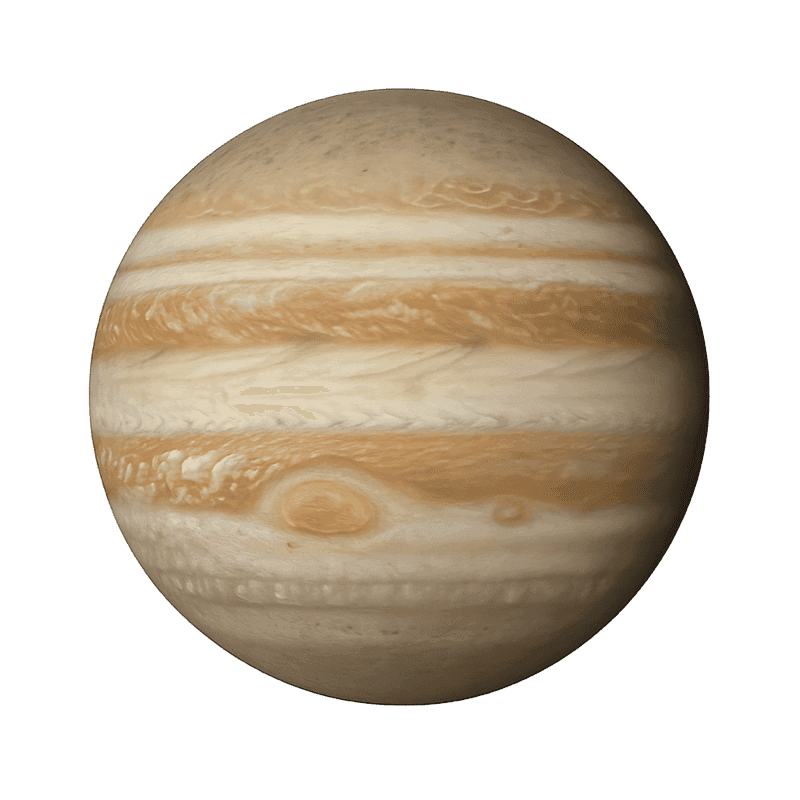
Jupiter
The king of planets — a colossal gas giant with a Great Red Spot storm raging for centuries.
Related articles & guides
Check out our planets page to explore our full catalog. You can also buy a star as a gift. See all 8 planets in order from the Sun. Read up on solar system facts. Learn what an exoplanet is. Find out how many planets there really are. Got questions? Visit our FAQ.
Frequently asked questions
Is Pluto a planet or a dwarf planet?
Pluto is officially a dwarf planet since 2006. The International Astronomical Union reclassified it because it hasn't cleared its orbital neighborhood in the Kuiper Belt.
Why did Pluto stop being a planet?
The IAU created a formal definition of planet in 2006 requiring objects to clear their orbit. Pluto shares the Kuiper Belt with thousands of other icy objects, so it doesn't meet this criterion.
When was Pluto demoted?
August 24, 2006. The IAU voted during their General Assembly in Prague. Only about 424 out of 10,000 members voted on the resolution.
How big is Pluto compared to Earth?
Pluto's diameter is about 1,473 miles (2,377 km), roughly 18% of Earth's diameter. It's smaller than Earth's Moon. You could fit about 170 Plutos inside Earth.
Could Pluto become a planet again?
If the IAU adopts a geophysical definition focusing on shape and geology rather than orbital dynamics, Pluto could regain planet status. But there's no active vote planned.
Got Questions?
Here's everything you need to know about buying a planet
Here's the deal: this is symbolic ownership. Nobody can legally own a planet (there's actually a UN treaty about it). But what you DO get is a gorgeous personalized certificate with real astronomical data and a unique registration number. Think of it as the most original gift you can possibly give someone.
The planet's real name, your personalized owner name, a custom message if you want one, a unique registration number, and the date. It's designed to look premium enough to frame and hang on a wall.
It shows up in your email as a PDF within a few minutes of buying. You can print it at home, take it to a print shop for a nicer version, or just share it digitally. Simple.
People go crazy for it. We've sold over 3,247 planets so far and we get messages all the time from people saying it's the best gift they've ever received. It works for birthdays, Valentine's Day, Christmas, weddings, new babies... pretty much any occasion.
100%. Every planet in our catalog is a real celestial body discovered by NASA, ESA, or other space agencies. We don't make anything up. The data on your certificate comes from confirmed scientific discoveries.
No problem. You've got 30 days to change your mind. Just email us at ethan@buymyplanet.com and we'll sort it out.
Yes! We sell both planets and stars. Stars are beautiful and classic. Planets are full worlds with their own characteristics, categories, and stories. Both come with a personalized certificate and real astronomical data. Pick what fits best, or get both.
Yep! Each certificate gets its own unique registration number. It's like naming a star. The ownership is personal to you, and your certificate is one of a kind.
Right now we do instant digital PDF certificates. You can print them at home or at any print shop. We're working on framed physical versions that'll ship to your door. Stay tuned.
Totally. Symbolic planet ownership is a novelty gift, kind of like star naming services. The 1967 Outer Space Treaty says no country can claim a planet, but personalized certificates are perfectly fine. It's a beloved gift worldwide.
Name Your Own Planet
Pick any planet or dwarf planet and get a personalized certificate with real NASA data, coordinates, and distance from Earth. Starting at $24.99.
Digital product. Symbolic ownership certificate.