How Many Planets Are There? The Full Count
Eight. That's the official count for our solar system. Mercury, Venus, Earth, Mars, Jupiter, Saturn, Uranus, and Neptune. Used to be nine, but Pluto got demoted in 2006 and the internet still hasn't forgiven the astronomers who voted on it. But the real number of planets out there? Way bigger than eight. We're talking billions. Let's break it all down.
How Many Planets Are in Our Solar System?
Our solar system has exactly 8 planets. Four small rocky ones close to the Sun (Mercury, Venus, Earth, Mars) and four massive ones farther out (Jupiter, Saturn, Uranus, Neptune). This has been the official count since August 24, 2006, when the International Astronomical Union (IAU) voted to redefine what counts as a planet. Before that vote, most textbooks said nine. After it, Pluto was reclassified as a dwarf planet. The decision was controversial then and honestly still sparks debates. But by the IAU definition, a planet must orbit the Sun, have enough mass to be roughly spherical, and have 'cleared the neighborhood' around its orbit. Pluto fails that third test because it shares its orbital space with other objects in the Kuiper Belt.
The Four Rocky Inner Planets
Mercury, Venus, Earth, and Mars are called the terrestrial planets because they're made of rock and metal with solid surfaces. Mercury is the smallest and closest to the Sun. Its surface temperature swings from 430°C during the day to -180°C at night because it has basically no atmosphere. Venus is roughly the same size as Earth but with a thick toxic atmosphere and surface temperatures around 465°C. It's actually hotter than Mercury despite being farther from the Sun. Earth is the only planet known to support life. About 71% of its surface is water. Mars is about half the size of Earth. It once had liquid water on its surface, and NASA's rovers are still searching for signs of ancient microbial life there.
The Four Giant Outer Planets
Jupiter, Saturn, Uranus, and Neptune are the outer planets. Jupiter and Saturn are gas giants made mostly of hydrogen and helium. Uranus and Neptune are ice giants with cores of water, methane, and ammonia ices. Jupiter is the biggest planet in our solar system by a ridiculous margin. You could fit about 1,300 Earths inside it. Its Great Red Spot is a storm that's been raging for at least 350 years. Saturn is famous for its rings, which are made of ice and rock chunks ranging from tiny grains to pieces the size of houses. Uranus rotates on its side, essentially rolling around the Sun like a ball. Nobody is entirely sure why. Neptune has the fastest winds in the solar system, reaching speeds over 2,000 km/h. It takes Neptune 165 Earth years to complete one orbit around the Sun.
What Happened to Pluto?
Pluto was discovered in 1930 by Clyde Tombaugh and spent 76 years as the ninth planet. Then in 2006, the IAU created a formal definition of 'planet' for the first time. The problem? Pluto orbits in the Kuiper Belt, a region full of icy objects. Some of those objects are nearly as big as Pluto. Eris, discovered in 2005, is actually more massive. If Pluto stayed a planet, astronomers would need to add Eris and potentially dozens more. Instead of expanding the list, they drew a line. Pluto became a 'dwarf planet,' a new category. The vote happened at an IAU meeting in Prague, and only about 424 of the organization's roughly 10,000 members were in the room. Alan Stern, the lead scientist on NASA's New Horizons mission to Pluto, has called the decision 'embarrassing' and still argues Pluto should be a planet.
Dwarf Planets in Our Solar System
The IAU currently recognizes five dwarf planets: Pluto, Eris, Haumea, Makemake, and Ceres. Ceres is the odd one out because it sits in the asteroid belt between Mars and Jupiter, while the other four live in the Kuiper Belt beyond Neptune. Eris is slightly smaller than Pluto but 27% more massive. Haumea spins so fast (one rotation every 4 hours) that it's shaped like a squished football. Makemake is one of the brightest objects in the Kuiper Belt. But five is probably a low count. Astronomers suspect there could be hundreds or even thousands of dwarf planets in the outer solar system that we haven't confirmed yet. Mike Brown, the astronomer who discovered Eris, estimates the real number could be over 200.
How Many Planets Exist in the Entire Universe?
This is where it gets wild. As of 2026, NASA has confirmed over 5,700 exoplanets, meaning planets orbiting stars other than our Sun. The Kepler space telescope alone found most of them by watching for tiny dips in starlight when a planet crosses in front of its star. But 5,700 is just the tip of the iceberg. Scientists now estimate that almost every star in the Milky Way has at least one planet. Our galaxy alone has roughly 100 to 400 billion stars. That suggests there could be hundreds of billions of planets just in the Milky Way. Scale that up to the estimated 2 trillion galaxies in the observable universe, and the total number of planets is somewhere in the trillions of trillions. The real answer to 'how many planets are there' is so large it makes your head spin.
How Do Scientists Discover New Planets?
There are a few main methods. The transit method is the most productive. Scientists point a telescope at a star and wait. If a planet passes between the star and the telescope, the star's brightness dips slightly. The Kepler and TESS space telescopes have found thousands of planets this way. Radial velocity (the wobble method) looks for tiny movements in a star caused by the gravitational pull of an orbiting planet. As the planet tugs on the star, the star wobbles, and that wobble shifts the star's light spectrum. Direct imaging is the hardest. You're trying to photograph a planet next to a star that's millions of times brighter. It's like spotting a firefly next to a lighthouse. But better technology is making it possible. The James Webb Space Telescope can even study the atmospheres of some exoplanets, checking for gases like water vapor and carbon dioxide.
Could There Be a Planet Nine?
Maybe. Some astronomers think a large, undiscovered planet could be hiding in the far reaches of our solar system. They call it Planet Nine (or Planet X, depending on who you ask). The evidence? Several small objects in the Kuiper Belt have oddly aligned orbits. One explanation is that a massive planet, maybe 5 to 10 times the mass of Earth, is out there pulling on them with its gravity. If Planet Nine exists, it would orbit the Sun at a distance 400 to 800 times farther than Earth. One orbit could take 10,000 to 20,000 years. At that distance, it would be extremely faint and hard to spot. The Vera C. Rubin Observatory, set to begin full operations in 2025, might be powerful enough to find it. Or it might confirm that Planet Nine doesn't exist and the orbital patterns are just a statistical fluke.
The History of Counting Planets
Ancient civilizations knew five planets: Mercury, Venus, Mars, Jupiter, and Saturn. You can see all five with the naked eye, and the word 'planet' comes from the Greek word for 'wanderer' because they moved differently from the fixed stars. Earth wasn't considered a planet until the 1500s when Copernicus proved it orbited the Sun. William Herschel discovered Uranus in 1781 using a telescope, making it the first planet found that wasn't visible to the naked eye. Neptune was discovered in 1846 through mathematical prediction. Astronomers noticed Uranus wasn't exactly where it should be, calculated where an unseen planet would need to be to cause that, and found Neptune right there. Pluto was found in 1930 after a long search. And then lost its planet status in 2006. The count has gone from 5 to 6 to 7 to 8 to 9 and back to 8. Science keeps changing.
Name a Planet and Make It Yours
You can't buy a planet for real. No law on Earth or in space lets you legally own a celestial body. But you can do something pretty fun: pick a real planet from NASA data, put a name on it, and get a personalized certificate. BuyMyPlanet lets you choose from planets with verified astronomical data. Each certificate costs $24.99 and includes real coordinates, physical characteristics, and your chosen name. You get a digital download in minutes. The premium option at $29.99 adds a permanent web page with a QR code on the certificate. It's symbolic ownership, not a property deed. But honestly, it makes a great gift. Something different from the usual stuff. Space lovers especially go for it.
Famous planets to explore
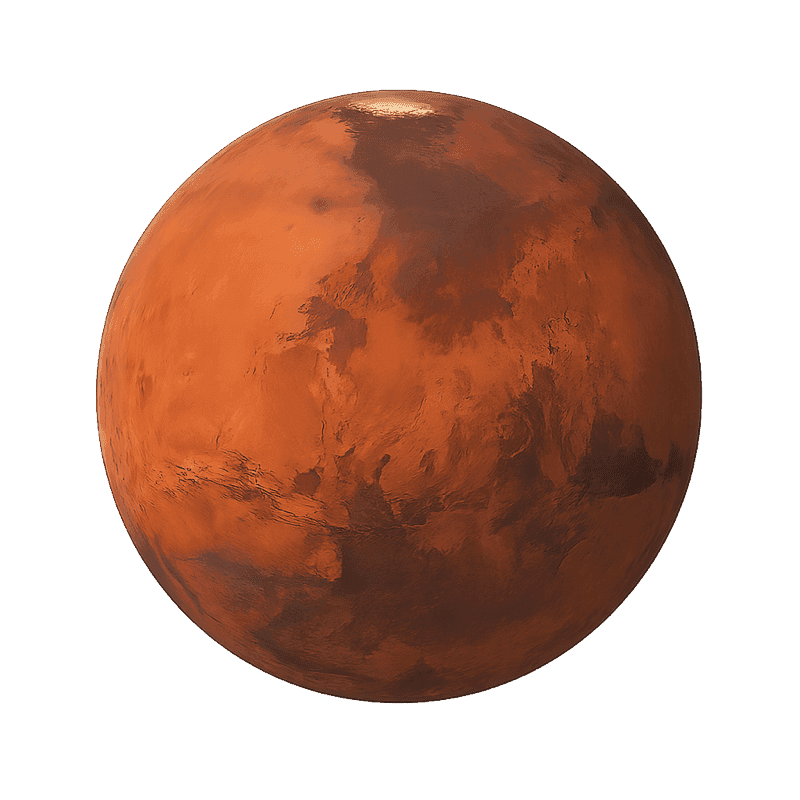
Mars
The Red Planet — a dusty, cold desert world that may have once harbored ancient rivers and lakes.
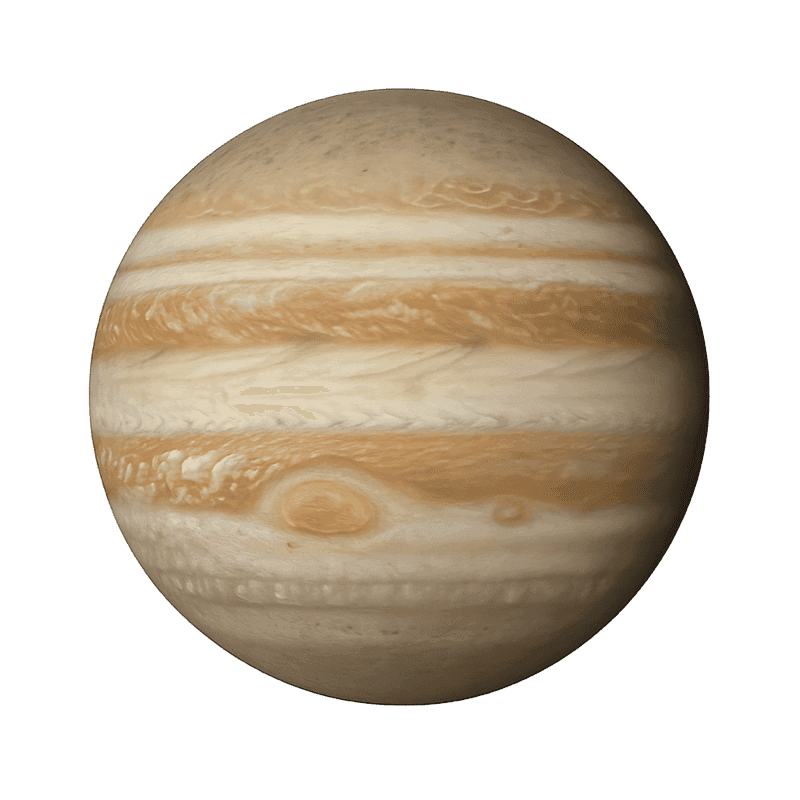
Jupiter
The king of planets — a colossal gas giant with a Great Red Spot storm raging for centuries.
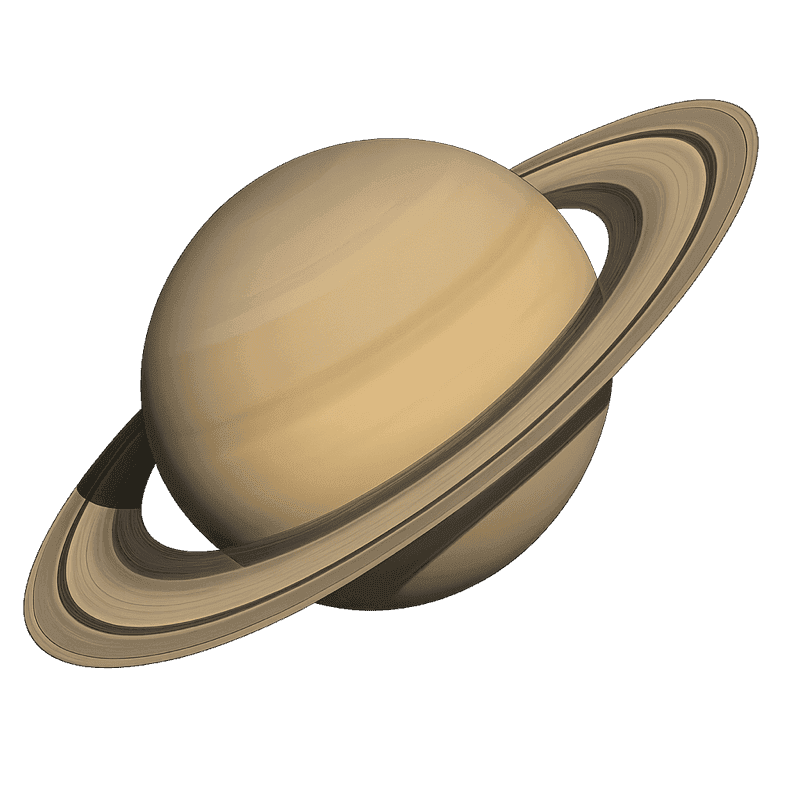
Saturn
The jewel of the Solar System — a majestic gas giant adorned with stunning rings.
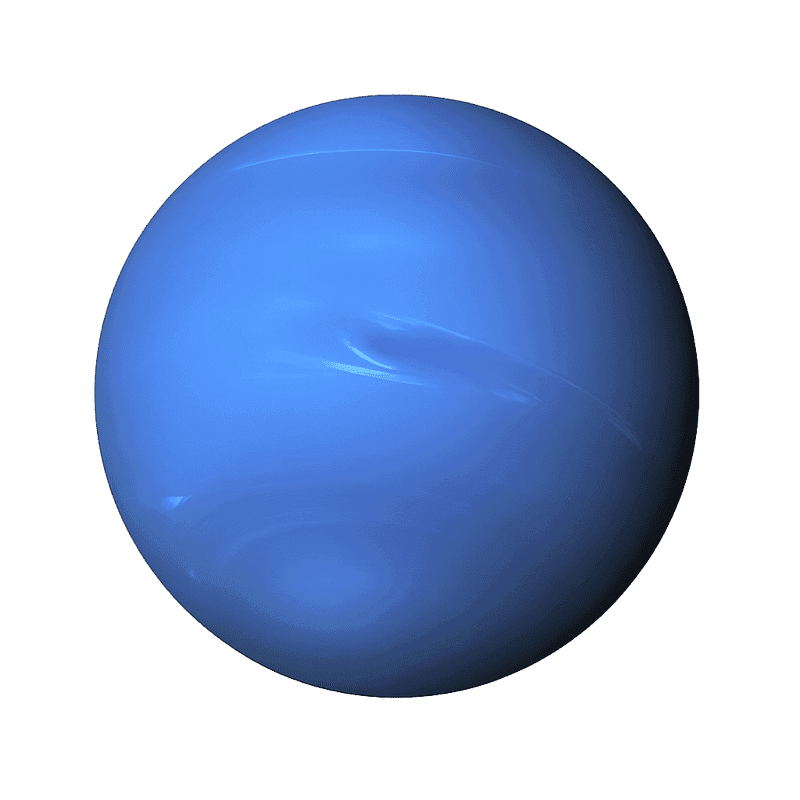
Neptune
A frigid ice giant with supersonic winds, the most distant planet in our Solar System.
Related articles & guides
Want to explore further? Check out our planets catalog. You can also buy a star as a gift. Read our deep dive on whether Pluto is still a planet. See all the planets in order from the Sun. Learn about exoplanets. Got questions? Visit our FAQ.
Frequently asked questions
How many planets are there in total?
Our solar system has 8 officially recognized planets: Mercury, Venus, Earth, Mars, Jupiter, Saturn, Uranus, and Neptune. Beyond our solar system, NASA has confirmed over 5,700 exoplanets as of 2026, with estimates suggesting trillions more across the observable universe.
Why is Pluto no longer a planet?
In 2006, the International Astronomical Union redefined what counts as a planet. A planet must orbit the Sun, be massive enough to be roughly spherical, and have cleared its orbital neighborhood. Pluto fails the third criterion because it shares the Kuiper Belt with many similar objects.
How many dwarf planets are there?
The IAU officially recognizes 5 dwarf planets: Pluto, Eris, Haumea, Makemake, and Ceres. However, astronomers believe there could be over 200 dwarf planets in the outer solar system that haven't been confirmed yet.
Are there planets outside our solar system?
Yes, thousands. As of 2026, over 5,700 exoplanets have been confirmed by NASA. Scientists estimate that nearly every star in the Milky Way has at least one planet, putting the galaxy total at hundreds of billions.
Could there be undiscovered planets in our solar system?
Possibly. Some astronomers hypothesize that a Planet Nine, roughly 5-10 times Earth's mass, could exist in the far outer solar system. The evidence comes from unusual orbital patterns of distant Kuiper Belt objects, but the planet hasn't been directly observed yet.
Got Questions?
Here's everything you need to know about buying a planet
Here's the deal: this is symbolic ownership. Nobody can legally own a planet (there's actually a UN treaty about it). But what you DO get is a gorgeous personalized certificate with real astronomical data and a unique registration number. Think of it as the most original gift you can possibly give someone.
The planet's real name, your personalized owner name, a custom message if you want one, a unique registration number, and the date. It's designed to look premium enough to frame and hang on a wall.
It shows up in your email as a PDF within a few minutes of buying. You can print it at home, take it to a print shop for a nicer version, or just share it digitally. Simple.
People go crazy for it. We've sold over 3,247 planets so far and we get messages all the time from people saying it's the best gift they've ever received. It works for birthdays, Valentine's Day, Christmas, weddings, new babies... pretty much any occasion.
100%. Every planet in our catalog is a real celestial body discovered by NASA, ESA, or other space agencies. We don't make anything up. The data on your certificate comes from confirmed scientific discoveries.
No problem. You've got 30 days to change your mind. Just email us at ethan@buymyplanet.com and we'll sort it out.
Yes! We sell both planets and stars. Stars are beautiful and classic. Planets are full worlds with their own characteristics, categories, and stories. Both come with a personalized certificate and real astronomical data. Pick what fits best, or get both.
Yep! Each certificate gets its own unique registration number. It's like naming a star. The ownership is personal to you, and your certificate is one of a kind.
Right now we do instant digital PDF certificates. You can print them at home or at any print shop. We're working on framed physical versions that'll ship to your door. Stay tuned.
Totally. Symbolic planet ownership is a novelty gift, kind of like star naming services. The 1967 Outer Space Treaty says no country can claim a planet, but personalized certificates are perfectly fine. It's a beloved gift worldwide.
Put Your Name on a Planet
8 planets in our solar system. Billions more out there. Pick one and make it yours. Real NASA data. Personalized certificate. $24.99 with instant delivery.
Digital product. Symbolic ownership certificate.