15 Famous Constellations You Can Spot Tonight
Look up on any clear night and you are staring at the same star patterns that ancient Greeks, Egyptian priests, and Polynesian navigators used to tell stories and find their way across oceans. There are 88 officially recognized constellations, but you really only need to know about 15 to impress anyone at a campfire. This guide covers the most famous constellations in the sky, their mythology, their brightest stars, and exactly how to find each one.
Related articles & guides
Discover the brightest stars in the sky and how stars are named. Browse our planets page or buy a star. Got questions? Check our FAQ.
What Exactly Is a Constellation?
A constellation is a defined area of the sky, not just a connect-the-dots pattern. The International Astronomical Union (IAU) divided the entire sky into 88 regions in 1922, and every star belongs to exactly one constellation. The patterns you recognize are technically called asterisms. The Big Dipper, for example, is an asterism inside the constellation Ursa Major. Most constellation names come from Greek and Roman mythology, though some southern sky constellations were named by European explorers in the 1500s and 1600s. The zodiac constellations sit along the ecliptic, the path the Sun appears to travel across the sky throughout the year.
Orion: The Hunter Everyone Recognizes
Orion is probably the single most recognizable constellation on Earth. Three stars in a neat row form his belt, and you can spot them from basically anywhere on the planet between November and March. Betelgeuse marks his shoulder with a reddish glow, while Rigel shines blue-white at his foot. Rigel is a blue supergiant about 120,000 times more luminous than the Sun. Below the belt, you can see the Orion Nebula (M42) with the naked eye on a dark night. It looks like a fuzzy patch, but it is actually a massive star-forming region 1,344 light-years away. Greek mythology says Orion was a giant hunter killed by a scorpion, which is why Orion and Scorpius are on opposite sides of the sky and never visible at the same time.
Ursa Major: Home of the Big Dipper
Ursa Major (the Great Bear) is the third-largest constellation and contains the most famous asterism in the Northern Hemisphere: the Big Dipper. Those seven stars are visible year-round from most of North America and Europe. The two stars at the end of the Dipper's bowl, Dubhe and Merak, are called the Pointer Stars because a line through them points directly to Polaris, the North Star. Ancient cultures worldwide saw a bear here. Native American traditions, Greek myths, and Hindu astronomy all independently saw a bear shape, which is pretty remarkable considering these cultures had no contact with each other. Mizar, the middle star in the handle, has a faint companion called Alcor. In ancient times, being able to split these two with your naked eye was used as an eyesight test for soldiers.
Ursa Minor: Follow It to the North Star
Ursa Minor (the Little Bear) is smaller and fainter than its big sibling, but it holds the most important navigational star in the sky: Polaris. The North Star sits almost exactly at the north celestial pole, so it barely moves while every other star appears to rotate around it. Contrary to popular belief, Polaris is not particularly bright. It ranks around 48th. But its fixed position made it priceless for navigation for thousands of years. Sailors, escaped slaves following the Underground Railroad, and hikers who lost their compass all relied on it. Polaris is actually a triple star system. The main star is a yellow supergiant about 2,500 times more luminous than the Sun. To find Ursa Minor, first locate the Big Dipper, then follow the Pointer Stars up about five fist-widths to Polaris. The rest of the Little Dipper curves away from there.
Cassiopeia: The W-Shaped Queen
Cassiopeia is one of the easiest constellations to spot in the Northern Hemisphere. Its five brightest stars form a clear W or M shape depending on the time of night and season. It sits opposite the Big Dipper across Polaris, so when the Dipper is low, Cassiopeia is high, and vice versa. In Greek mythology, Cassiopeia was a vain queen who bragged that she was more beautiful than the sea nymphs. Poseidon got annoyed and chained her to the sky as punishment, where she sometimes hangs upside down. The constellation sits in a rich part of the Milky Way, so if you have binoculars, sweep through it on a dark night. You will see star clusters and nebulae everywhere. Cassiopeia A, a supernova remnant, is the strongest radio source in the sky outside our solar system, though it is not visible to the naked eye.
Scorpius: The Scorpion with a Red Heart
Scorpius genuinely looks like what it is named after, which is rare for constellations. A curved line of stars traces out a body, claws, and a stinger. At its heart sits Antares, a red supergiant so large that if you placed it where the Sun is, its surface would extend past the orbit of Mars. The name Antares means "rival of Mars" because its reddish color can be confused with the planet. Scorpius is a summer constellation in the Northern Hemisphere, best viewed from June through August when it hangs low in the southern sky. From the Southern Hemisphere, it climbs much higher and is even more impressive. According to myth, the scorpion killed Orion, which is why the two constellations are placed on opposite sides of the sky. When Scorpius rises, Orion sets.
Leo: The Lion of Spring
Leo is a zodiac constellation that dominates the spring sky in the Northern Hemisphere. Its brightest star, Regulus, is one of the four Royal Stars of ancient Persia. The distinctive pattern called the Sickle looks like a backwards question mark and outlines the lion's head and mane. The rest of the body stretches east to Denebola, the tail star. Leo is pretty easy to spot once you know the trick: the two stars at the bottom of the Big Dipper's bowl (opposite from the Pointer Stars) form a line that leads south straight to Regulus. In Greek mythology, Leo represents the Nemean Lion that Hercules killed as the first of his twelve labors. The lion's hide was impervious to weapons, so Hercules had to strangle it. Zeus placed the lion in the sky to honor the battle.
Taurus: The Bull and the Seven Sisters
Taurus sits near Orion in the winter sky and is one of the oldest documented constellations. Cave paintings in Lascaux, France, dating back 17,000 years may depict Taurus and the Pleiades. The V-shaped Hyades cluster forms the bull's face, with the orange giant Aldebaran as its glaring eye. Aldebaran is about 65 light-years away and 44 times the Sun's diameter. The real showpiece is the Pleiades (the Seven Sisters), a tight cluster of young blue stars on the bull's shoulder. Most people can see six stars with the naked eye, but sharp-eyed observers spot seven or more. Through binoculars, it is stunning. Taurus also contains the Crab Nebula (M1), the remnant of a supernova that Chinese and Japanese astronomers recorded in 1054 AD. It was bright enough to see during the day for 23 days.
Gemini: The Celestial Twins
Gemini features two bright stars, Castor and Pollux, representing the twin brothers from Greek mythology. Pollux, the brighter of the two, is an orange giant 34 light-years away. Castor looks like a single star but is actually a system of six stars orbiting each other. Gemini sits between Taurus and Cancer in the zodiac, making it a winter and early spring constellation. The best way to find it is to draw a line from Rigel through Betelgeuse in Orion and keep going. The Geminid meteor shower, one of the best of the year, radiates from this constellation every December. At its peak around December 13-14, you can see up to 150 meteors per hour under ideal conditions. It is one of the few meteor showers that performs well before midnight.
Cygnus: The Swan Flying Along the Milky Way
Cygnus (the Swan) flies along the band of the Milky Way, which makes it a spectacular constellation to explore with binoculars. Its brightest star, Deneb, marks the tail and is one of the most luminous stars visible to the naked eye, roughly 200,000 times brighter than the Sun. Deneb forms one corner of the Summer Triangle along with Vega in Lyra and Altair in Aquila. The body of the swan stretches down to Albireo, a gorgeous double star at the swan's head. Through a small telescope, Albireo splits into a gold and blue pair that looks almost artificial. Cygnus X-1, located in this constellation, was the first widely accepted black hole candidate. It was confirmed through observations in the 1970s and helped prove that black holes are real, physical objects.
Canis Major: The Great Dog and the Brightest Star
Canis Major follows its master Orion across the winter sky and holds the brightest star in the entire night sky: Sirius. At magnitude -1.46, Sirius is nearly twice as bright as the second-brightest star, Canopus. It sits only 8.6 light-years away, making it one of our closest stellar neighbors. Sirius is a binary system. Sirius A is what you see, a white star about twice the Sun's mass. Sirius B, its companion, is a white dwarf the size of Earth but with a mass comparable to the Sun. Finding Canis Major is simple: follow the three belt stars of Orion downward and to the left. Sirius is the unmistakable brilliant white star you hit. The ancient Egyptians timed their calendar to Sirius. Its first appearance before dawn each year coincided with the Nile flood, the most important event in Egyptian agriculture.
Lyra: Small but Mighty
Lyra is a compact constellation, but it punches above its weight. Its brightest star, Vega, is the fifth-brightest star in the sky and one of the closest bright stars at just 25 light-years away. Vega was the first star other than the Sun to be photographed (1850) and the first to have its spectrum recorded. For decades, astronomers used Vega as the definition of zero magnitude. Lyra represents the lyre of Orpheus, the legendary musician whose playing could charm animals, trees, and even rocks. When Orpheus died, Zeus placed his lyre in the sky. The Ring Nebula (M57), one of the most photographed objects in amateur astronomy, sits between the two bottom stars of Lyra. Through a telescope, it looks like a tiny cosmic smoke ring. In about 12,000 years, Earth's axial wobble will make Vega our North Star instead of Polaris.
Aquila: The Eagle of the Summer Triangle
Aquila (the Eagle) is anchored by Altair, one of the closest bright stars at just 17 light-years from Earth. Altair spins incredibly fast, completing a rotation in about 10 hours (the Sun takes roughly 25 days). That rapid spin squishes it into a slightly flattened shape. Altair forms the southern point of the Summer Triangle, making it easy to find from June through October. In Greek mythology, Aquila was the eagle that carried Zeus's thunderbolts. In another story, the eagle carried the mortal Ganymede up to Mount Olympus. In Chinese and Japanese folklore, Altair represents the cowherd Niulang, separated from his lover Zhinv (Vega) by the Milky Way, which runs between them. They are allowed to meet once a year, celebrated during the Qixi Festival and Tanabata.
Pegasus: The Winged Horse of Autumn
Pegasus dominates the autumn sky with the Great Square of Pegasus, a huge asterism formed by four stars that looks like a diamond tilted on its side. The square is so large that on a really dark night, you can count dozens of faint stars inside it. On a light-polluted night, the square appears completely empty, which makes it a good test of your sky conditions. Pegasus is connected to the Andromeda constellation through Alpheratz, the star at the northeast corner of the Great Square (which technically belongs to Andromeda). In Greek mythology, Pegasus was the winged horse born from the blood of Medusa after Perseus cut off her head. The hero Bellerophon rode Pegasus into battle against the Chimera. 51 Pegasi, a Sun-like star in this constellation, was the first confirmed star found to have an exoplanet orbiting it, earning its discoverers the 2019 Nobel Prize in Physics.
Andromeda: Gateway to Another Galaxy
Andromeda is famous less for its stars and more for what sits inside it: the Andromeda Galaxy (M31), the closest major galaxy to the Milky Way at 2.5 million light-years away. On a dark night away from city lights, M31 is visible to the naked eye as a faint, elongated smudge. It is the most distant object most people will ever see without a telescope. The galaxy contains roughly a trillion stars and is on a collision course with the Milky Way. The two galaxies will merge in about 4.5 billion years, forming a new galaxy astronomers have nicknamed Milkomeda. In mythology, Andromeda was a princess chained to a rock as a sacrifice to a sea monster, then rescued by Perseus. To find the Andromeda Galaxy, start at the Great Square of Pegasus, hop two stars along the chain of Andromeda, then look slightly above.
Sagittarius: The Archer Pointing at the Galactic Center
Sagittarius sits in the direction of the center of our Milky Way galaxy. When you look at Sagittarius on a dark summer night, you are literally looking toward a supermassive black hole (Sagittarius A*) four million times the mass of the Sun. The constellation's brightest stars form a teapot shape rather than an archer, and the dense star clouds of the Milky Way look like steam rising from the spout. Sagittarius is absolutely packed with deep-sky objects. The Lagoon Nebula (M8), the Trifid Nebula (M20), and the Omega Nebula (M17) are all visible with binoculars. It is one of the richest areas of sky for anyone with a small telescope. The constellation is best viewed in summer from the Northern Hemisphere, where it sits low in the south. From the Southern Hemisphere, it climbs much higher and is even more spectacular.
How to Start Finding Constellations Tonight
You do not need any equipment to enjoy famous constellations. Your eyes are enough. Start with the Big Dipper since it is visible year-round from northern latitudes. Use the Pointer Stars to find Polaris, then Cassiopeia on the other side. From there, learn Orion in winter and the Summer Triangle (Vega, Deneb, Altair) in summer. Download a free app like Stellarium or Sky Map on your phone. Point it at the sky and it identifies everything in real time. Give your eyes at least 20 minutes to adjust to the dark, and try to get away from streetlights. Even a short drive to a suburban park makes a big difference. Binoculars are the best beginner upgrade. A regular 10x50 pair reveals star clusters, nebulae, and double stars that are invisible to the naked eye. You will see more with binoculars than Galileo saw with his first telescope.
Name a Star in Any Constellation
After learning about these famous constellations, you might wonder if you can name a star in one of them. Official star names are assigned by the IAU and cannot be purchased. But symbolic star naming has been a popular gift for decades. You pick a real star with real coordinates in any constellation you want, choose a name, and receive a certificate documenting everything. BuyMyPlanet offers star naming certificates starting at $24.99. Each one includes actual NASA catalog data, sky coordinates you can look up with any star map app, and instant digital delivery. The premium version at $29.99 adds a personalized web page with a QR code. It is a fun gift for anyone who loves stargazing, or a meaningful way to honor someone special by connecting their name to the night sky.
Famous stars to explore
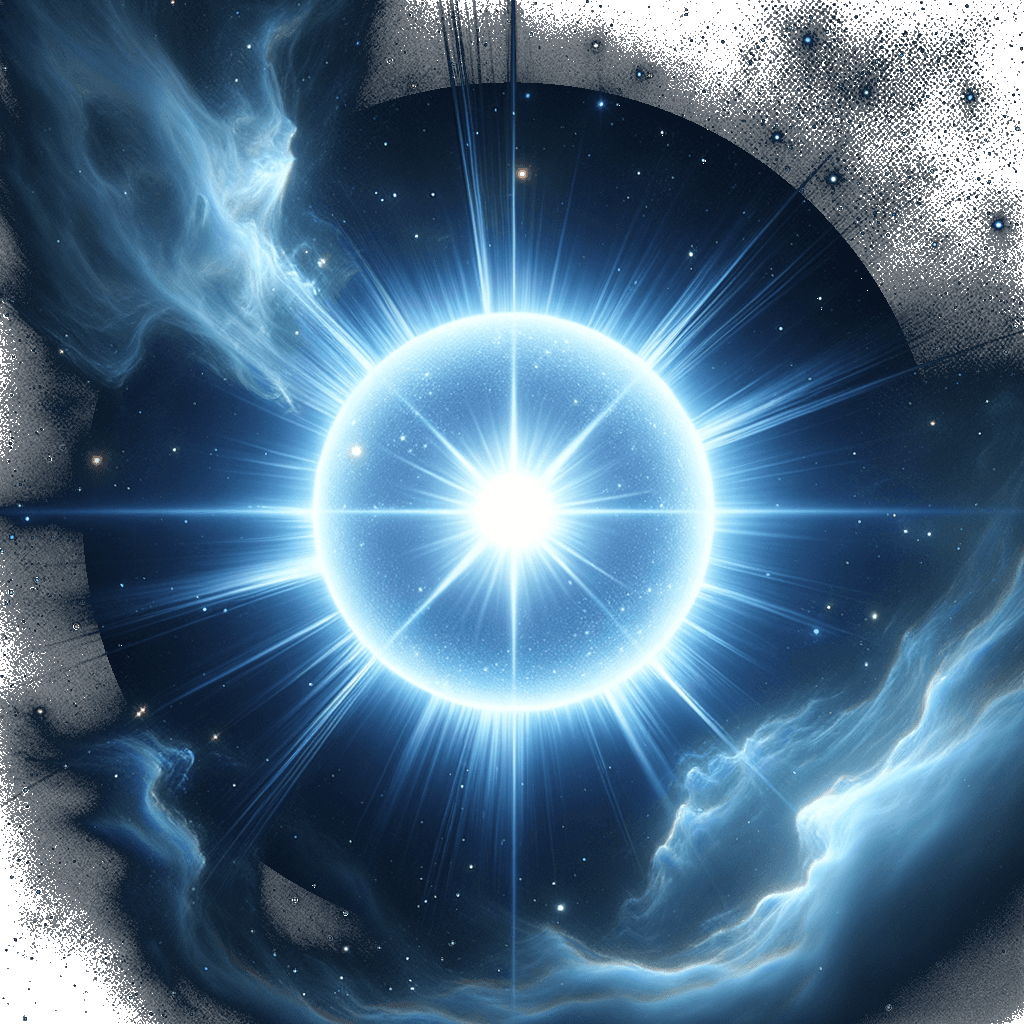
Sirius
The brightest star in the night sky. Sirius is a dazzling blue-white star just 8.6 light-years away. Ancient Egyptians built their calendar around it.
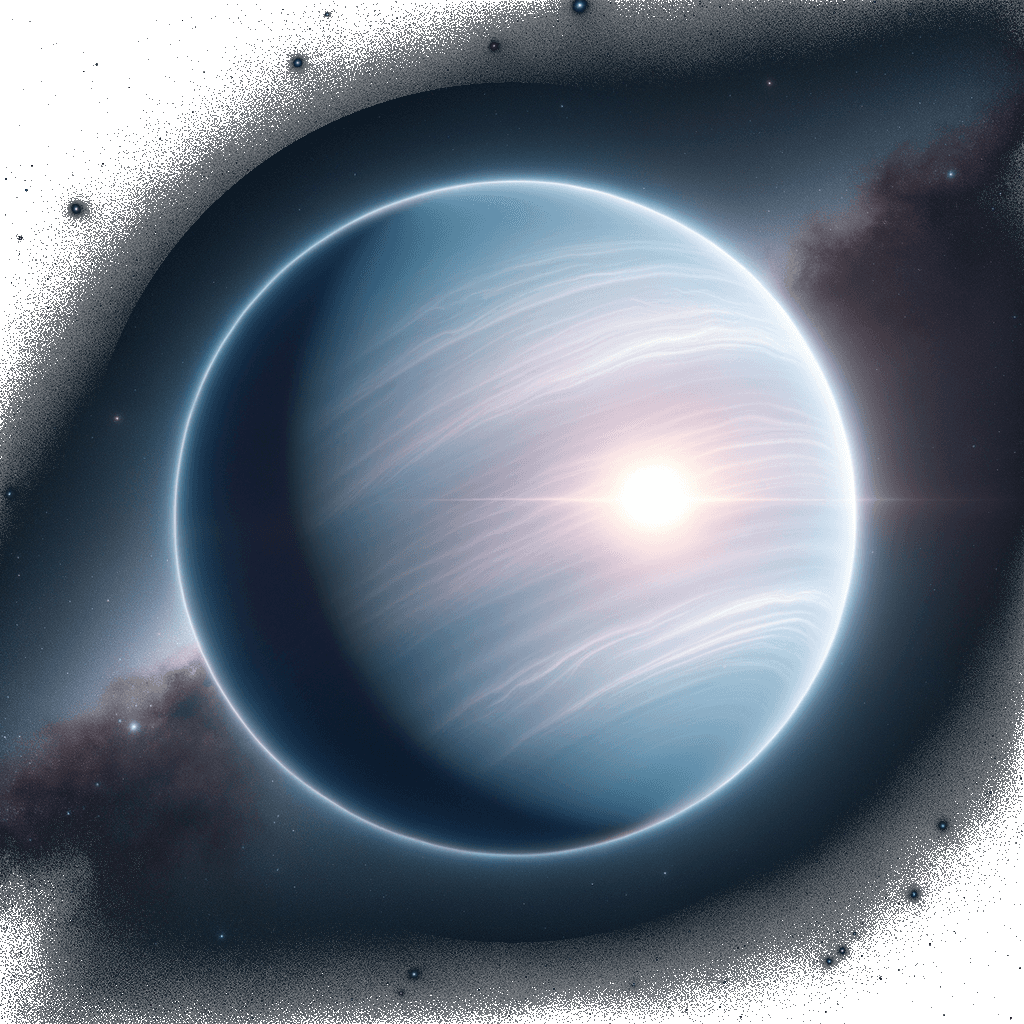
Vega
One of the brightest stars you can see from Earth. Vega was the first star ever photographed (back in 1850) and the first to have its spectrum recorded.
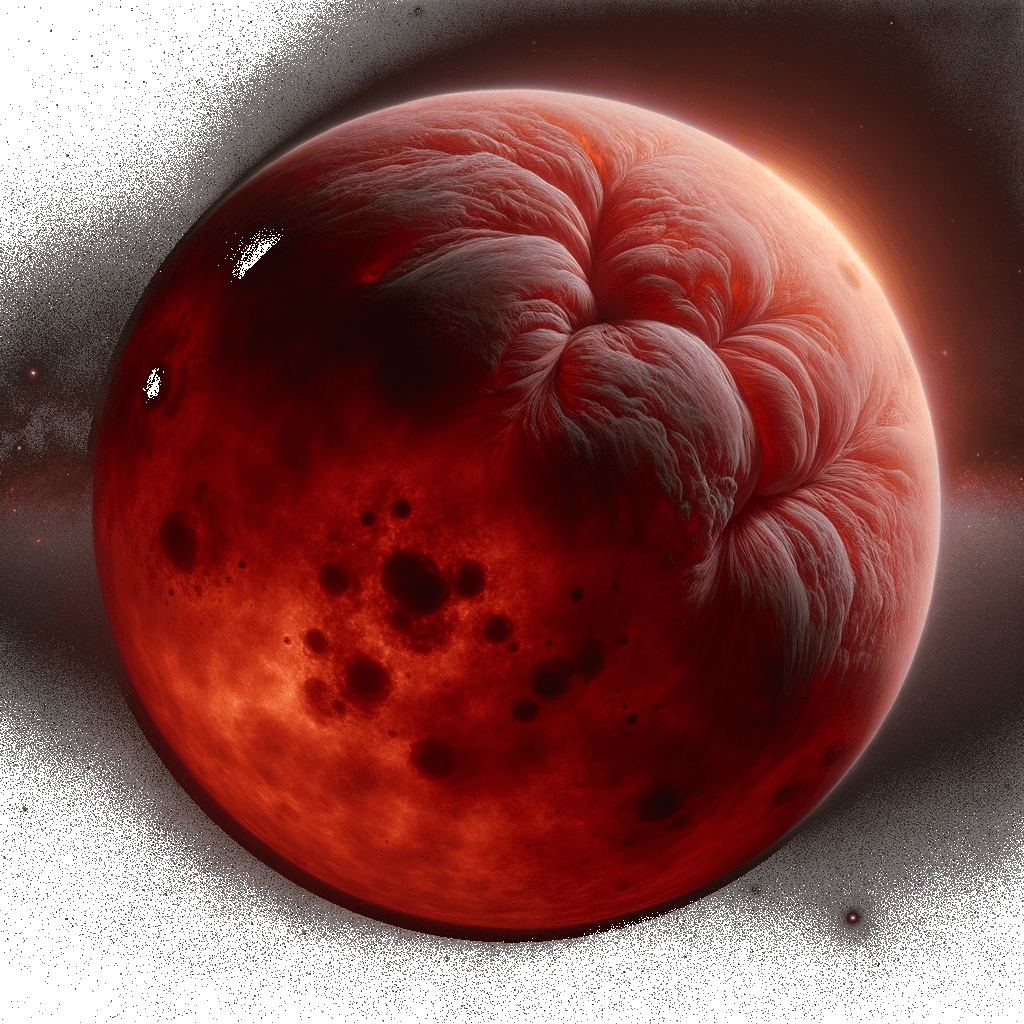
Betelgeuse
A red supergiant that could explode as a supernova any day now. Betelgeuse is so massive that if it replaced our Sun, it would swallow Mars.
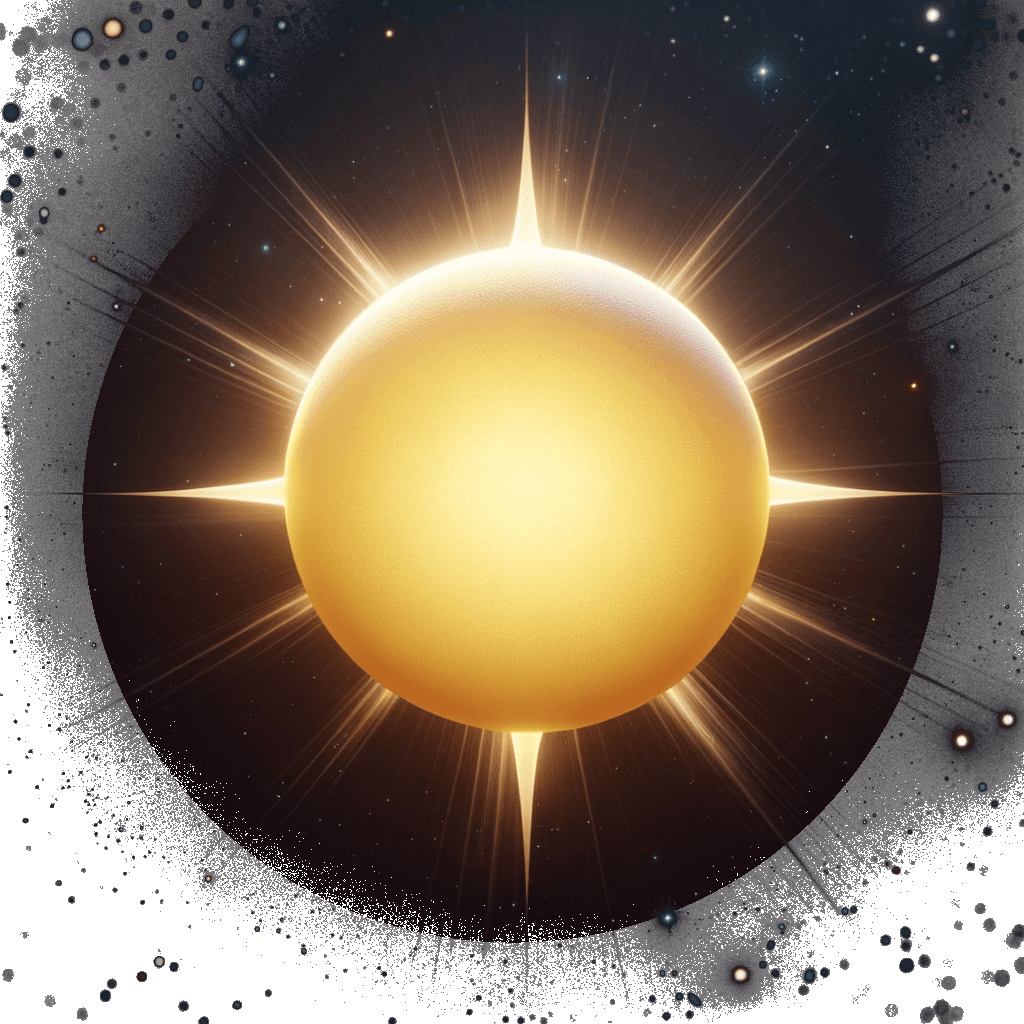
Polaris
The North Star. For centuries, sailors and explorers used Polaris to find their way. It sits almost perfectly above Earth's north pole.
Frequently asked questions
What are the easiest constellations to find?
Orion, Ursa Major (the Big Dipper), and Cassiopeia are the three easiest constellations to spot. Orion's three belt stars are unmistakable in winter. The Big Dipper is visible year-round from northern latitudes. Cassiopeia's W shape is easy to recognize near Polaris.
How many constellations are there in total?
The International Astronomical Union officially recognizes 88 constellations. They cover the entire sky so every star belongs to exactly one constellation. 48 of these were listed by the Greek astronomer Ptolemy in the 2nd century, and the remaining 40 were added between the 16th and 18th centuries.
Can you see all 88 constellations from one location?
No. Which constellations you can see depends on your latitude and the time of year. From mid-northern latitudes like the US or Europe, you can see about 60 to 70 constellations throughout the year. Some southern constellations like Crux (the Southern Cross) are never visible from the north.
What is the difference between a constellation and an asterism?
A constellation is an officially defined area of the sky recognized by the IAU. An asterism is a recognizable pattern of stars that may be part of one or more constellations. The Big Dipper is an asterism within Ursa Major. The Summer Triangle spans three different constellations.
Why do constellations look different at different times of year?
As Earth orbits the Sun, different parts of the sky become visible at night. Constellations that are behind the Sun during one season become visible six months later. Circumpolar constellations near the poles (like Ursa Major and Cassiopeia) are visible year-round from their respective hemispheres.
Got Questions?
Here's everything you need to know about buying a planet
Here's the deal: this is symbolic ownership. Nobody can legally own a planet (there's actually a UN treaty about it). But what you DO get is a gorgeous personalized certificate with real astronomical data and a unique registration number. Think of it as the most original gift you can possibly give someone.
The planet's real name, your personalized owner name, a custom message if you want one, a unique registration number, and the date. It's designed to look premium enough to frame and hang on a wall.
It shows up in your email as a PDF within a few minutes of buying. You can print it at home, take it to a print shop for a nicer version, or just share it digitally. Simple.
People go crazy for it. We've sold over 3,247 planets so far and we get messages all the time from people saying it's the best gift they've ever received. It works for birthdays, Valentine's Day, Christmas, weddings, new babies... pretty much any occasion.
100%. Every planet in our catalog is a real celestial body discovered by NASA, ESA, or other space agencies. We don't make anything up. The data on your certificate comes from confirmed scientific discoveries.
No problem. You've got 30 days to change your mind. Just email us at ethan@buymyplanet.com and we'll sort it out.
Yes! We sell both planets and stars. Stars are beautiful and classic. Planets are full worlds with their own characteristics, categories, and stories. Both come with a personalized certificate and real astronomical data. Pick what fits best, or get both.
Yep! Each certificate gets its own unique registration number. It's like naming a star. The ownership is personal to you, and your certificate is one of a kind.
Right now we do instant digital PDF certificates. You can print them at home or at any print shop. We're working on framed physical versions that'll ship to your door. Stay tuned.
Totally. Symbolic planet ownership is a novelty gift, kind of like star naming services. The 1967 Outer Space Treaty says no country can claim a planet, but personalized certificates are perfectly fine. It's a beloved gift worldwide.
Name a Star in Your Favorite Constellation
Pick a real star, give it any name you want, and get a certificate with actual sky coordinates. Starting at $24.99 with instant digital delivery.
Digital product. Symbolic ownership certificate.